REVIEW · AKROTIRI & ARCHAEOLOGICAL SITE TOURS
Santorini: Akrotiri Prehistoric City Guided Walking Tour
Book on GetYourGuide →Operated by NST Santorini Tours · Bookable on GetYourGuide
A buried city under pumice is unforgettable. This 1.5-hour Santorini walk through Akrotiri Prehistoric City turns the island’s famous mythology into something you can actually see: streets, houses, and daily life frozen by a 16th-century BC eruption. I especially liked the focus on a licensed archaeologist guide and the way the tour sets you up to notice details fast.
One caution: private-tour expectations don’t always match reality. A few bookings have reported meeting-point confusion or guide issues, so I’d treat arrival time seriously and keep your confirmation info handy.
In This Review
- Key Things You’ll Notice at Akrotiri
- Walking Into Akrotiri: A Volcanic Snapshot of Bronze Age Life
- The 1.5-Hour Guided Walk: What Happens When You Arrive
- A Licensed Archaeologist’s Value: How the Explanations Change What You See
- Inside the City: Houses, Streets, Squares, and Workshops
- The Wall Painting Clue: Why These Ruins Feel Personal
- Seeing the 1967 Discovery in Context: Why It Matters You Know the Story
- After the Tour: Your Own Pace (and a Beach Break)
- Price and Value: Is $424 per Group Up to 2 Worth It?
- Logistics Reality Check: Meeting Point, Group Size, and Hearing Your Guide
- Accessibility and Languages: Easy to Fit In, If You Plan Smart
- Who This Tour Best Suits
- Should You Book This Akrotiri Walking Tour?
- FAQ
- Is the entry ticket included in this tour?
- Where do I meet the guide?
- How long is the guided portion?
- What languages are the tours offered in?
- Is the tour wheelchair accessible?
- Can I cancel for a full refund?
Key Things You’ll Notice at Akrotiri
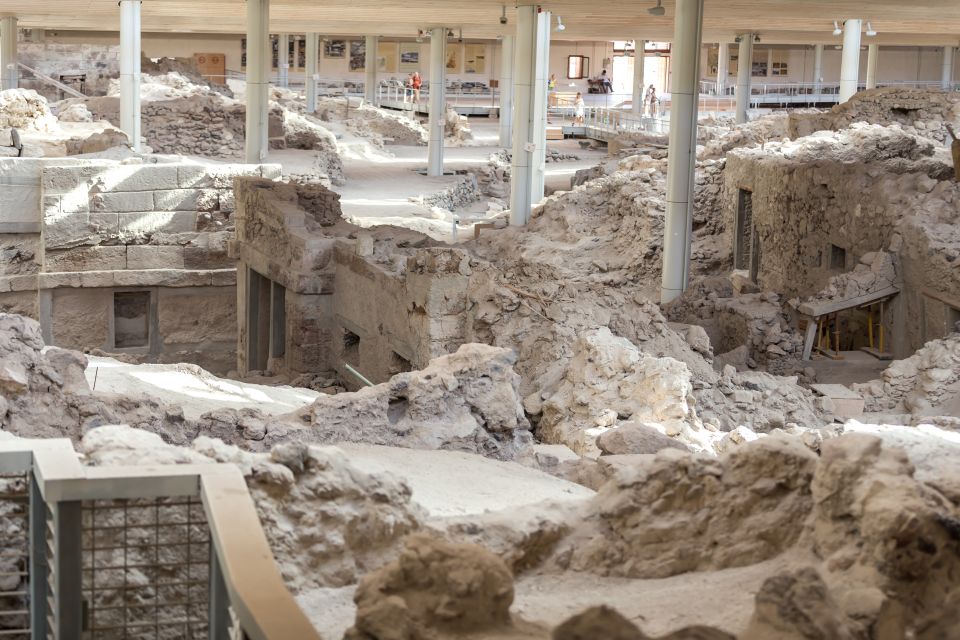
- A “time capsule” city from the 16th century BC, preserved under pumice for almost 3,500 years
- Guiding by a licensed archaeologist, who helps you connect what you see to how people lived
- Well-preserved streets, squares, pottery, and workshops, not just ruins-as-a-backdrop
- Two- and three-story houses, once decorated with wall paintings
- Time to continue at your own pace after the guided portion, including the option to head to the nearby beach for a swim
Walking Into Akrotiri: A Volcanic Snapshot of Bronze Age Life
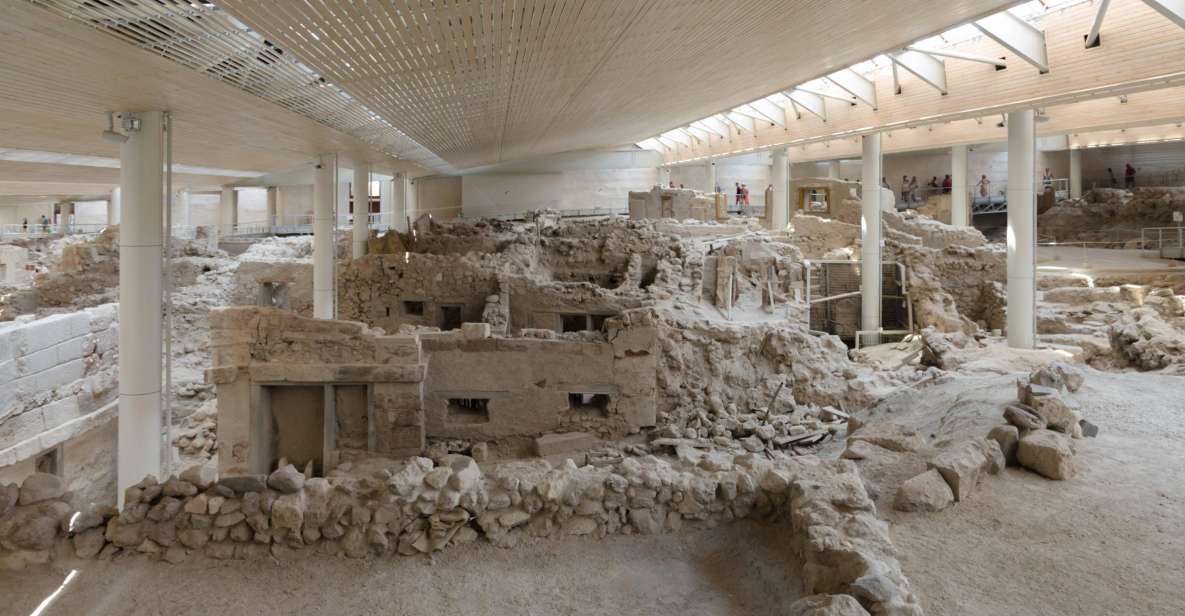
Akrotiri is one of those places where the scale of the disaster makes your brain pause. Santorini’s story includes a volcanic eruption in the 16th century BC that wiped out life on the island, and much of the city collapsed beneath the waves. What makes this site so compelling is that the surviving remains were effectively sealed under pumice for thousands of years.
What you’re walking through today is the result of excavations that began in 1967 under Professor Spyros Marintos. He uncovered evidence of a planned city with houses, streets, squares, and workshops—an urban layout that feels surprisingly modern when you stand in it.
I like that this tour doesn’t treat the ruins like a museum diorama. It gives you a lens for reading the site: where people moved, where they worked, and what life might have looked like before the eruption erased it.
You can also read our reviews of more walking tours in Santorini



The 1.5-Hour Guided Walk: What Happens When You Arrive
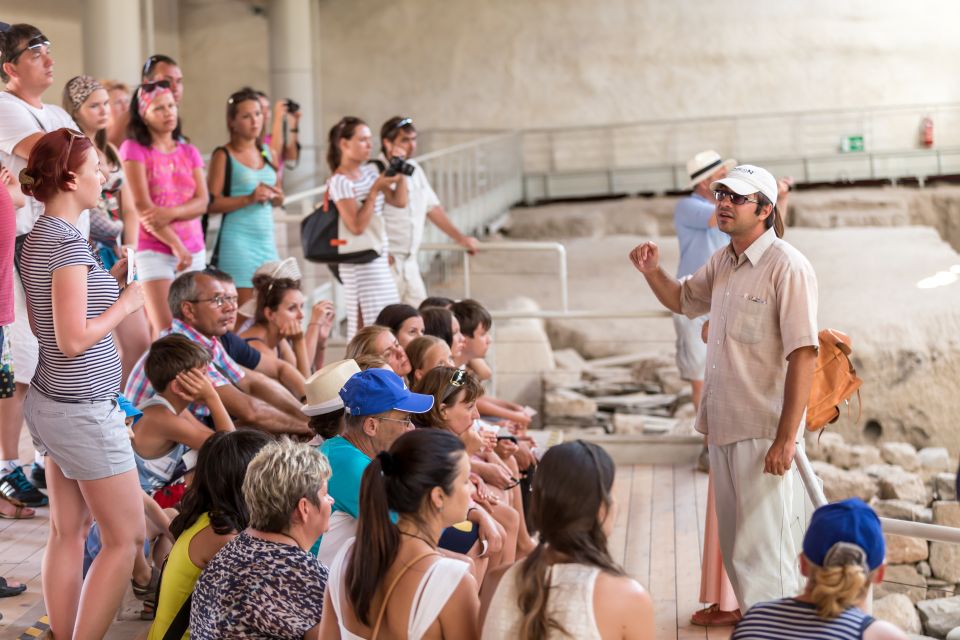
Your tour starts at the entrance of Akrotiri Prehistoric City, after the ticket office. The operator helps with entry ticket purchase, and then you meet your assigned guide and begin together with the group. The guided portion is designed to be tight and focused—about 90 minutes—so you don’t wander aimlessly through an archaeological maze.
Because the meeting happens at the entrance, you’ll want to arrive early enough to get organized. Not just to find the correct location, but to confirm you’re paired with the right guide and language group. This matters more here than at many attractions because some people have reported unclear finding-your-guide moments.
Also, since the entry ticket is not included, budgeting matters. Plan to purchase it on-site before the walk starts, so you’re not stuck waiting in line while others begin.
A Licensed Archaeologist’s Value: How the Explanations Change What You See
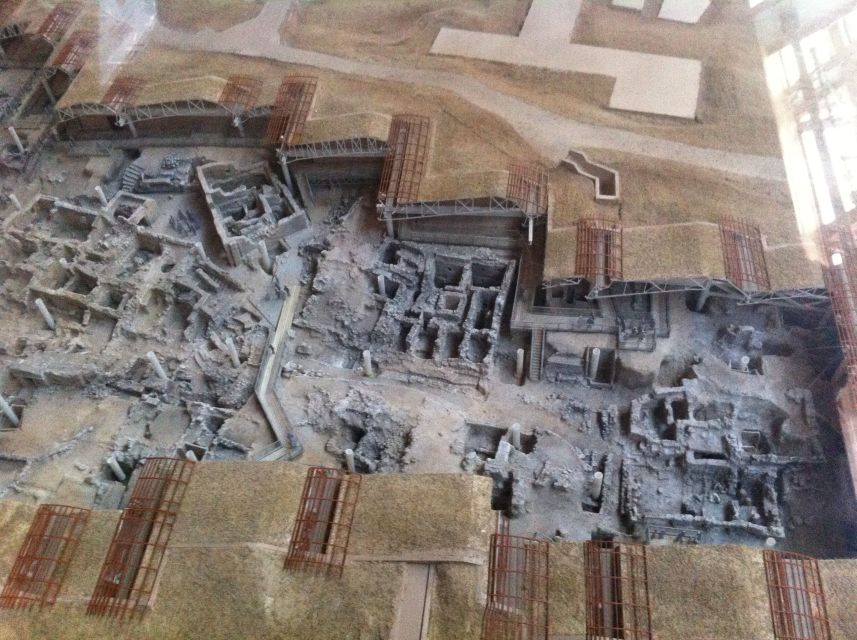
A big part of why I’d choose this kind of guided walk is simple: Akrotiri looks impressive, but it becomes meaningful when someone helps you interpret it. In this experience, the guide is a licensed archaeologist, which usually means you’ll get clearer, more careful connections between the physical remains and Bronze Age life.
The guide’s job isn’t just to list facts. It’s to point you toward the why. Why certain walls are where they are. Why streets and squares matter in understanding daily movement. Why pottery fragments aren’t random—they’re part of routine.
Even at 90 minutes, a good archaeologist guide can make you notice things you’d otherwise miss, like passageways and building layouts that hint at how residents organized space.
Inside the City: Houses, Streets, Squares, and Workshops
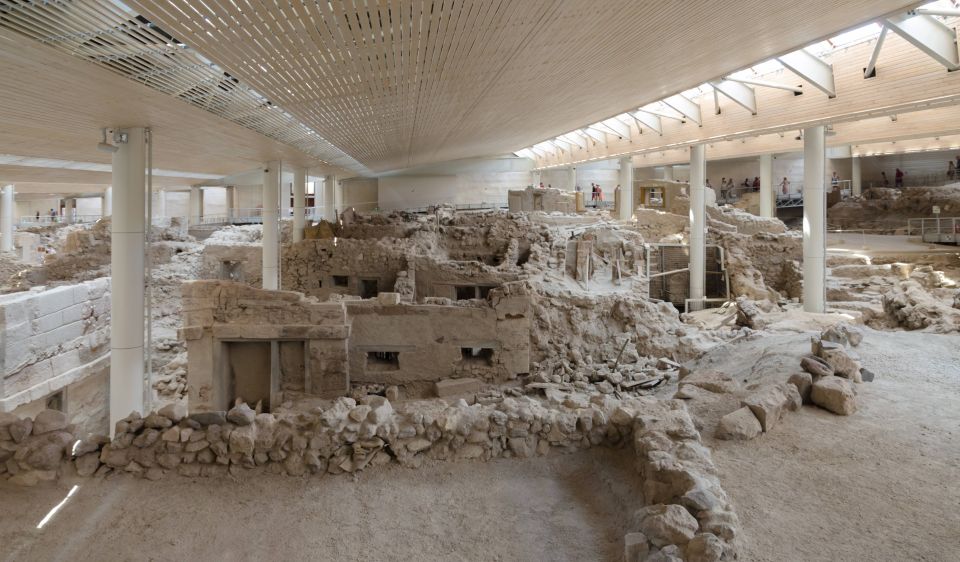
Akrotiri’s layout is one of its best “wow” factors. During your guided time, you’ll walk through the excavated area where you can see preserved buildings and the passageways connecting them. The site includes two- and three-story houses—structure you can physically grasp, rather than just read about.
You’ll also spend time on what people probably spent time doing: the roads and squares (public space), plus workshops (work space). That city planning detail matters because it helps you stop thinking of Akrotiri as only a tragedy. It’s also evidence of organization, craft, and community.
And yes, pottery enters the picture. You’ll see examples of pottery at Akrotiri, which is valuable because pottery is often one of the most informative artifacts in ancient settlements—useful objects that reflect everyday needs and trade patterns. Even when you don’t know the technical terms, the sheer presence of pottery gives the site a human scale.
The Wall Painting Clue: Why These Ruins Feel Personal
One reason Akrotiri makes such a strong impression is that the excavated houses weren’t just bare structures. They were once decorated with wall paintings. Even if what you see today is partial or reconstructed, the idea changes your mental picture immediately.
Instead of imagining gray stone rooms, you start picturing color, decoration, and a level of artistic effort that belongs to a living culture. That’s where the myth of Atlantis connects for many visitors too—not because Akrotiri proves Atlantis, but because the “lost city” feeling is real. This is a place where a powerful natural event froze an advanced settlement in time.
That’s also why the guided portion helps: it’s easier to understand what you’re looking at when someone tells you what decorative or architectural elements used to mean.
You can also read our reviews of more guided tours in Santorini




Seeing the 1967 Discovery in Context: Why It Matters You Know the Story
It’s easy to treat archaeology like a static thing: you arrive, you see ruins, you leave. Here, the story has motion. The site wasn’t discovered until excavations began in 1967. Professor Spyros Marintos uncovered evidence that a city existed on the island—evidence preserved in pumice under layers of volcanic collapse.
That history matters because it explains the “wow” factor you feel when you walk through. Akrotiri didn’t gradually crumble into view over centuries. It was sealed, preserved, and then uncovered when modern archaeology could study it properly.
When you understand that the pumice essentially acted like packaging—covering buildings, streets, and daily-life materials for almost 3,500 years—the preservation stops being a lucky accident and becomes part of how the site is studied.
After the Tour: Your Own Pace (and a Beach Break)
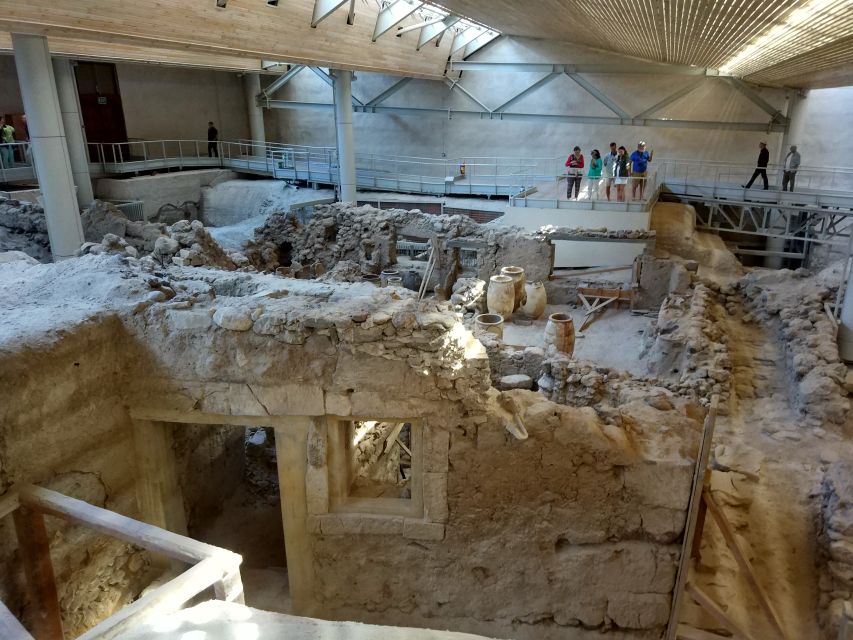
Once the guided portion ends, you’re free to walk around at your own pace. This is a practical, high-value feature because Akrotiri rewards slow attention. If you’re the type who likes to look twice—at doorways, corners, and passageways—you’ll use that extra freedom well.
If you want to add a classic Santorini moment, there’s also the option to visit the nearby beach after exploring. A swim is mentioned as a natural follow-up, and it’s a good match for the tone of the visit: you go from a dark, volcanic story to a bright Aegean recovery.
Just plan your timing. The tour is 1.5 hours total, so you’ll still want enough daylight left to feel un-rushed at both the site and the water.
Price and Value: Is $424 per Group Up to 2 Worth It?
The price is $424 per group up to 2, with the entry ticket not included. To judge value, I look at what’s actually included: a licensed archaeologist guide plus free time to continue exploring after the walk.
If you’re traveling as two people, the per-person cost is effectively lower than it first appears—around $212 each, before the ticket. If you’re solo, the full group price applies, which may make it less cost-friendly.
So here’s the practical way to decide: if you care about interpretation—who lived where, why the layout looks the way it does, how the eruption story ties into what you see—this guide can be worth the money. If you prefer wandering and reading at your own speed, you may feel like you’re paying mainly for context you can also get through your own attention and site signage.
Either way, don’t forget the entry ticket. Budget for it so the final spend matches what you expect.
Logistics Reality Check: Meeting Point, Group Size, and Hearing Your Guide
This is where I get a bit blunt, because it affects your experience more than people expect. The meeting point is at the entrance of the excavation site, after the ticket office. If you miss that moment, you lose the structure of the tour—because the guided walk depends on everyone starting together.
Some reported problems fall into a few patterns: guide lateness, overbooking, difficulty finding the guide, and—worst case—guide not showing up. Even when things work, one factor can still reduce your enjoyment: if the group becomes too large, it gets harder to hear the guide clearly, especially in outdoor ruins where acoustics don’t help.
So I recommend this approach:
- Arrive early enough to buy your ticket and settle before the scheduled start.
- Keep your confirmation details accessible on your phone.
- If you’re doing a private group, manage expectations by treating the meeting moment as a checkpoint, not a casual meet-and-greet.
If you want a quieter, more personal experience, this becomes especially important. In a place like Akrotiri, clarity beats speed.
Accessibility and Languages: Easy to Fit In, If You Plan Smart
This tour is listed as wheelchair accessible, and it’s offered in English, French, Spanish, and German. That language coverage matters because archaeology explanations can be technical. Being able to follow comfortably makes the ruins click.
The walking portion is still a walking tour, so comfortable shoes are a must. Also, because you’ll be outdoors and spending time moving through excavated areas, plan for sun and wind even if you’re not expecting much exertion.
Who This Tour Best Suits
This experience is a strong match if you want more than a quick look at ancient walls. You’ll like it if you enjoy connecting archaeology to real life: daily routines, building design, and how a volcanic eruption reshaped an entire settlement.
It’s also a good fit for:
- First-time Santorini visitors who want a serious culture stop beyond views
- People who learn best with an expert guiding their attention
- Anyone traveling in a small private group who wants structure without spending all day
If you’re the type who loves solo exploration and already feels confident navigating ruins with guidebooks and signage, you might not need the extra cost of a guided format. In that case, you’d be paying mainly for interpretation rather than access.
Should You Book This Akrotiri Walking Tour?
My take: book it if a guided archaeological explanation is your kind of vacation value. The combination of a licensed archaeologist guide plus time to explore on your own is a solid way to get both understanding and flexibility. Akrotiri is one of the most memorable archaeological sites in Greece precisely because it’s preserved enough to feel real.
But book with eyes open. The biggest risk isn’t the site—it’s the coordination. Since this experience depends on finding the assigned guide at the entrance and starting on time, I’d plan to arrive early and keep communication details ready.
If that sounds manageable, go for it. Akrotiri is the kind of place where the extra guidance can turn a set of ruins into a story you’ll carry long after the pumice dust is a memory.
FAQ
Is the entry ticket included in this tour?
No. The entry ticket to the archaeological site is not included. Your guide helps you with buying the ticket before the walking tour begins.
Where do I meet the guide?
Meet your assigned guide at the entrance of Akrotiri Prehistoric City, after the ticket office.
How long is the guided portion?
The total duration is 1.5 hours. After the guided part, you’re free to explore the site on your own.
What languages are the tours offered in?
The tour is available in English, French, Spanish, and German.
Is the tour wheelchair accessible?
Yes, it’s listed as wheelchair accessible.
Can I cancel for a full refund?
Yes. Free cancellation is available up to 24 hours in advance for a full refund.