REVIEW · AKROTIRI & ARCHAEOLOGICAL SITE TOURS
Akrotiri Family Treasure Hunt ,kid friendly Archeology Adventure
Book on Viator →Operated by EXPLORE AKROTIRI · Bookable on Viator
Akrotiri gets a kid-friendly treasure hunt makeover. This private Santorini outing sends children to hunt for clues around the excavated Minoan town, a place buried by volcanic ash around 1450 BC. It’s a fun way to turn ruins into real stories, with a treasure hunt mission that runs alongside a guided visit for adults.
I like the setup because kids aren’t just “looking at rocks.” They solve small tasks like junior archaeologists while parents learn how the settlement worked—water, streets, buildings, and the eruption that preserved it. I also like the hotel pickup and drop-off, which keeps the day simple, especially with children in tow.
One thing to consider: the Akrotiri entrance fee is extra (around €20 per person), and the time on-site is roughly 1 hour 40 minutes to a bit over 2 hours. If you prefer to linger in one spot, you’ll get the best result by asking your guide to slow down for questions.
In This Review
- Quick highlights
- Why Akrotiri feels different when kids are part of it
- The core of the experience: a private guide plus a family treasure hunt
- Walking the main street: shops, houses, and the echoes of fresco color
- Kitchens, balconies, and drainage systems: the practical side of ancient life
- The volcanic ash factor: why these ruins survived
- Tour pace and asking questions: how to get the best version of this day
- Hotel pickup and drop-off: the easiest way to do Akrotiri with kids
- Admission fee math: does the price make sense?
- Who this tour is best for (and who might want another option)
- The souvenir-shop detour: manage it early if it matters to you
- What to bring so the day stays smooth
- Should you book Akrotiri Family Treasure Hunt?
- FAQ
- What age is this tour designed for?
- How long does the Akrotiri experience take?
- Is the Akrotiri entrance ticket included?
- Do you offer hotel pickup and drop-off?
- Is the tour private?
- Do I get a mobile ticket?
Quick highlights
- Treasure hunt missions for ages 5–12 that keep children engaged without dragging adults through guesswork
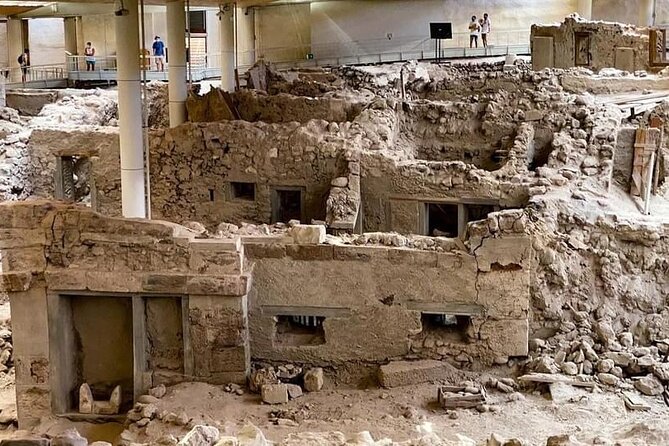
- Excavated Minoan town preserved by volcanic ash around 1450 BC
- Main street walk past the remains of shops, houses, and areas where frescoes once added color
- Water and drainage systems in view, including what life required for everyday survival
- Private pacing where your group can ask questions and stay at a comfortable rhythm
- Some guides use iPad visuals to help you picture what you’re seeing
Why Akrotiri feels different when kids are part of it
Akrotiri isn’t a “stand around and read plaques” kind of site. It’s an entire prehistoric settlement, excavated and revealed in sections, where the layout matters—streets, buildings, and systems that make it feel like a real place rather than a pile of stones.
The family format is smart. Children get a mission, so they’re not waiting for adults to finish. Meanwhile, you’re still getting a real guided experience: your guide explains how the settlement worked, what the eruption changed, and what the ruins suggest about daily life.
You can also read our reviews of more tours and experiences in Santorini.



The core of the experience: a private guide plus a family treasure hunt
Your tour is private, so it’s just your group moving through Akrotiri. That matters at a child-friendly site, because timing can go sideways fast with bathroom breaks, snack needs, and the occasional “I found something important” detour.
For the kids, the experience is built like an archaeological game. They complete simple tasks, spot clues, and connect what they see to how people lived. You’ll notice the big difference between this and a standard visit: kids are given a job, so attention stays sharper.
For you, it’s a guided visit that doesn’t talk down. You’ll learn about the architecture and technology of the town and why Akrotiri is so valuable to understanding the Minoans. In reviews, guides like Georgia and Mariana were praised for explaining details clearly and staying comfortable with questions at a family pace.
Walking the main street: shops, houses, and the echoes of fresco color
Most of the experience centers on a walk through the excavated town, including the main street. This is where Akrotiri starts to click into place: it’s not just individual rooms; it’s a neighborhood with connections between spaces.
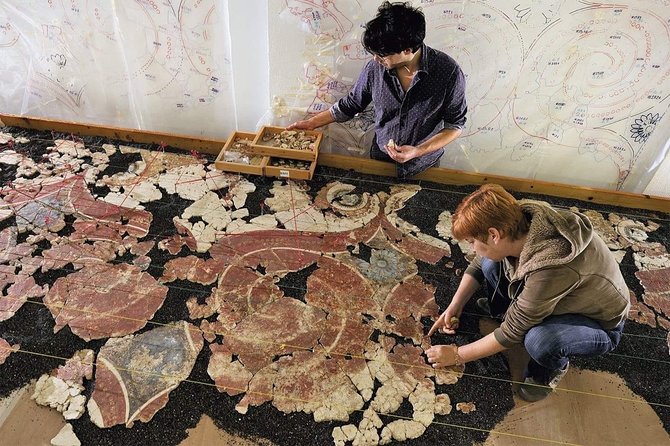
As you move along, you’ll see remains that hint at daily life—areas that once functioned as shops and houses. Some structures even connect to what people used to paint and decorate. You may also spot evidence of colorful frescoes, though you won’t see them whole like in a museum gallery.
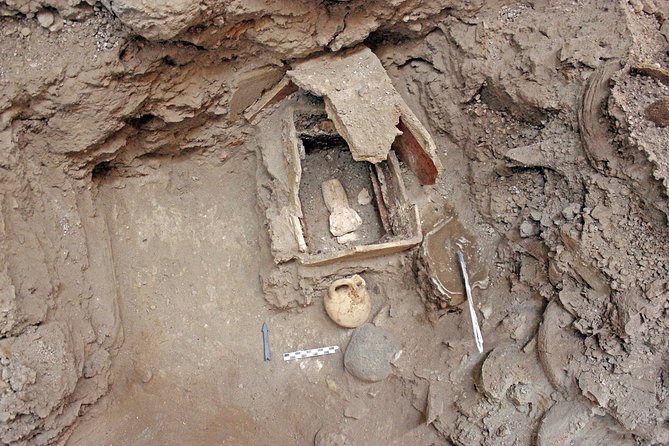
A favorite detail people bring up is the way pottery and surviving materials show original markings or drawings. Seeing those preserved traces in context helps you understand that this wasn’t some abstract “ancient era.” It was a community with craft, style, and everyday routines.
Kitchens, balconies, and drainage systems: the practical side of ancient life
Akrotiri is often described through big events, but the best learning comes from small, practical clues. You’ll be shown remnants of kitchens, balconies, and the systems that kept water moving where it needed to go.
Pay attention to the water and drainage story. The settlement has evidence that people planned for daily needs—how they accessed water, how waste and water were managed, and how the town’s design supported ordinary routines. In one review, the idea of how the community adapted to access water was a standout moment.
This is the part that can surprise adults. You come for the famous eruption, but you leave understanding how people dealt with the basics—space, water, sanitation, and how buildings worked as systems rather than isolated rooms.
The volcanic ash factor: why these ruins survived
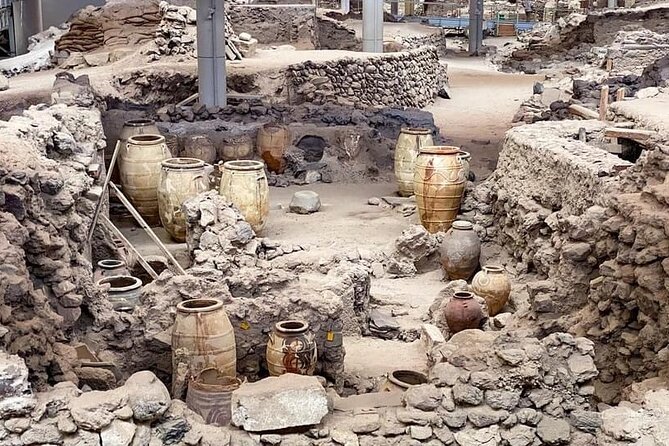
Akrotiri’s dramatic preservation is one reason it’s so worthwhile. The town was buried under volcanic ash around 1450 BC, which helped protect many features that might have disappeared at another site.
As your guide explains it, the eruption becomes more than a headline. You’ll connect the preservation to what you can actually see now: the shape of streets, building layouts, and remnants of daily infrastructure. That makes the ruins feel less accidental and more like a snapshot in time.
It’s also a reminder that archaeology is about inference. Your guide helps you interpret what remains—and what doesn’t—so you understand why certain details survive and what scholars think they mean.



Tour pace and asking questions: how to get the best version of this day
This is where private tours earn their keep. In the best scenarios, your guide adjusts to your group’s speed, answers questions easily, and stays flexible if a child wants to linger on something.
In one positive account, a guide was praised for walking at the group’s pace and welcoming questions. Another review noted that the guide used extra visuals on an iPad, which can help when your brain needs a nudge to picture what’s missing.
Still, there’s a trade-off to private tours too. One review criticized a guide who moved quickly past some sights. The takeaway for you is simple: ask your guide to slow down if something grabs your attention. If you have questions, ask them during the walk and again at the end.
If your group includes kids, build in micro-moments: short pauses to look closely, one child question at a time, and a calm reset if attention drifts.
Hotel pickup and drop-off: the easiest way to do Akrotiri with kids
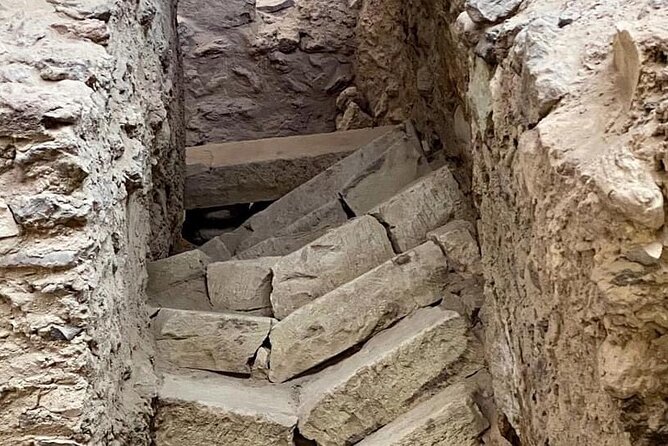
Pickup and drop-off are included, which is a big deal on Santorini. Akrotiri can be easier when your day starts with someone else handling the logistics.
In reviews, pickup happened from a hotel in Oia with professional drivers, and the drive was described as scenic. Even if your route differs, the pattern holds: this is set up so you aren’t coordinating transit with children and timing your visit around bus schedules.
What to do: put in a pickup address you can confidently reach without extra stress. If you’re staying in a dense area or using shared transfer points, clarify the exact meeting spot so you’re not herding kids at the last minute.
Admission fee math: does the price make sense?
The tour price is listed per group at about $421.03 for up to four people. Entrance to Akrotiri is not included—budget about €20 per person for the site ticket—so your total cost will be higher than the base price.
When the price feels right:
- If you’re a family of 3–4, the per-person cost drops fast.
- If your kids would otherwise need a less structured visit, the treasure hunt adds real value.
- If you want adult learning that doesn’t feel like it’s racing, you’ll likely use the private guide well.
When it might feel less appealing:
- If you’re only one adult (or just one adult with a child) paying almost the whole group rate.
- If you already know you’ll be too tired after the rest of your day to ask questions and engage.
I’d treat this as a “pay for structure” option. You’re not just buying access—you’re buying a guide who can translate ruins into a story your kids can participate in.
Who this tour is best for (and who might want another option)
This is ideal for families with children ages 5–12. The missions are designed to make kids active, and the adult commentary helps you avoid the usual gap between child attention spans and archaeology’s many details.
It’s also a good fit for adults who learn best through context. If you like seeing how systems worked—especially water and drainage—Akrotiri’s remains make that easier when a guide connects the dots.
If your group includes teenagers who already want more freedom, you might find a self-guided visit works too. But the private angle still helps if you want custom pacing and a chance to ask why certain features matter.
The souvenir-shop detour: manage it early if it matters to you
One practical heads-up: some private guides may suggest shopping options around the site area. If this is something you care about—like sticking to the official on-site store—say it early so there’s no awkward momentum later.
You’re in control here. Decide your priorities at the start of the tour: museum-style viewing, shopping time, photos, or spending more time at specific ruins. A good private guide can flex within reason.
What to bring so the day stays smooth
Akrotiri involves walking around an archaeological site. You’ll want to arrive ready for outdoor ruins and some uneven footing.
Bring:
- Water for kids
- Comfortable shoes you trust on stones and slopes
- Sun protection (Akrotiri is outdoors)
- A small snack plan, since kids do best with predictable energy
If you’re traveling with a stroller, you might find it easier to keep it compact and ready for rougher paths. Your guide’s flexibility helps, but plan for walking.
Should you book Akrotiri Family Treasure Hunt?
I’d book this when you want Akrotiri to feel like an actual family outing, not a chore. The combination of kid missions and a guided adult walkthrough is what turns this site into something memorable for more than just the parents.
Choose it especially if:
- Your kids are in the 5–12 range
- You want a private guide who can answer questions
- You’d rather pay for structure than try to interpret everything on your own
Skip it or consider a different format if:
- You’re visiting solo or only one adult in your group and the rate doesn’t fit your budget
- You strongly prefer long, slow stops without a set rhythm
FAQ
What age is this tour designed for?
It’s aimed at children aged 5–12, with a family-friendly treasure hunt format that also includes guided commentary for adults.
How long does the Akrotiri experience take?
Plan for about 1 hour 40 minutes to 2 hours 10 minutes.
Is the Akrotiri entrance ticket included?
No. Admission to the Akrotiri Archaeological Site is not included and costs about €20 per person.
Do you offer hotel pickup and drop-off?
Yes. Pickup and return are included as part of the tour.
Is the tour private?
Yes. This is a private tour/activity, and only your group participates.
Do I get a mobile ticket?
Yes. Mobile ticket is offered.
###