REVIEW · COOKING CLASSES
Traditional Kouzina Santorini Cooking Experience
Book on Viator →Operated by Pigaia travel · Bookable on Viator
Cooking here feels like a local secret.
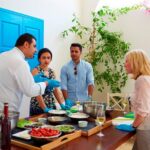
This Traditional Kouzina Santorini Cooking Experience turns you from spectator into cook, using fresh vegetables and herbs from gardens plus ingredients sourced from local farmers. You’ll work with Chef Alexandra in a home-style kitchen setting, learning classic island dishes you can actually repeat back home.
Two things I like a lot: first, you cook standout Santorini food like fava and ntomatokeftedes (tomato fritters), so the lesson isn’t just theory. Second, the pace stays friendly and practical, with a hands-on approach and clear instruction, including help from Alexandra’s partner Eleanor. The one thing to consider is that it’s weather-dependent, so you’ll want some flexibility in your schedule.
If your trip is tight and you prefer passive sightseeing, this may feel like too much kitchen time—though that’s also the point.
In This Review
- Key highlights you’ll care about
- What the “Kouzina Santorini” class really gives you
- The farm-to-table approach, and why it matters
- Meet Chef Alexandra and the small-team setup
- Your starter step: Santorinian salad as the flavor warm-up
- Fava: the Santorini dish you’ll want to cook again
- Pork fillets with vinsanto sauce: comfort food with a local twist
- Ntomatokeftedes (tomato fritters): the technique dish
- Santorini spaghetti with tomato paste and garlic: how the sauce becomes the meal
- Pairing your meal with volcanic wines
- What’s included (and how that affects value)
- Pickup timing, cruise meeting point, and getting there smoothly
- Weather matters more than you might expect
- Who should book this Santorini cooking class
- Should you book the Traditional Kouzina Santorini Cooking Experience?
- FAQ
- How long is the Traditional Kouzina Santorini cooking experience?
- What is the price per person?
- Is pickup included, and where does it start?
- What languages is the cooking experience offered in?
- What does the class include?
- What recipes are on the menu?
- Is the meal included at the end?
- What happens if the weather is poor?
Key highlights you’ll care about
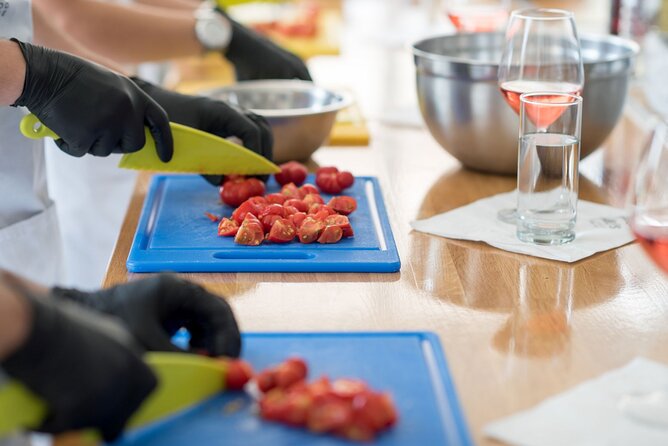
- Farm-to-table ingredients from gardens plus local farmers, not generic supermarket items
- Small group size (max 10) for a more personal lesson flow
- Chef Alexandra + assistant Eleanor, so you get real help while you cook
- A menu focused on Santorini staples: salad, fava, ntomatokeftedes, pork with vinsanto sauce, and tomato-garlic spaghetti
- Wine, soft drinks, and water included with your meal
What the “Kouzina Santorini” class really gives you
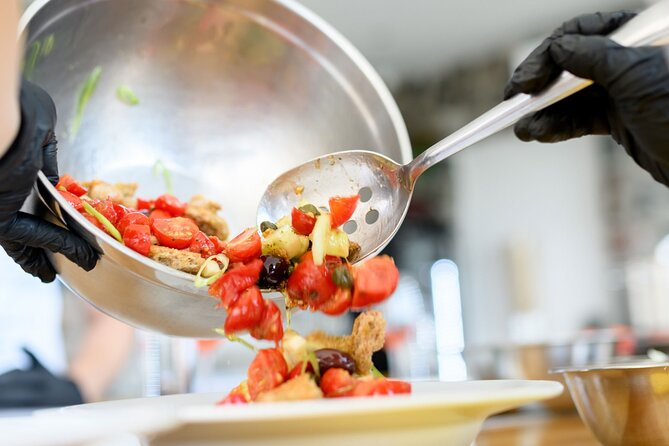
This isn’t a cookie-cutter cooking show. The value here is that you learn how Santorini food is built: simple ingredients, island-specific flavor choices, and techniques that make a weeknight meal feel special. You start with fresh produce (vegetables and herbs from gardens) and move into classic recipes that are meant to be shared right after the cooking ends.
The tone is hands-on, not lecture-only. You’ll be cooking under guidance, not hovering with a clipboard. And because the group is capped at 10, the lesson doesn’t feel like an assembly line.
You can also read our reviews of more cooking classes in Santorini

The farm-to-table approach, and why it matters
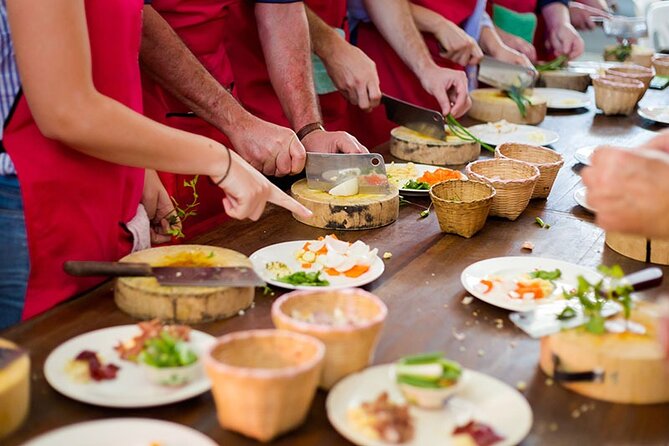
The experience is built around a farm-to-table idea: you’re given fresh vegetables and herbs from gardens, and other ingredients come from local farmers. That matters more than it sounds. When the ingredients are fresh and seasonal, the recipes taste like the island version, not a toned-down “tourist Greek” version.
It also teaches you a useful home lesson: you’re not just copying a dish, you’re learning the logic behind it. For example, tomato-based items on Santorini lean on ripe flavor and garlic balance, and the cooking approach reflects that.
Meet Chef Alexandra and the small-team setup
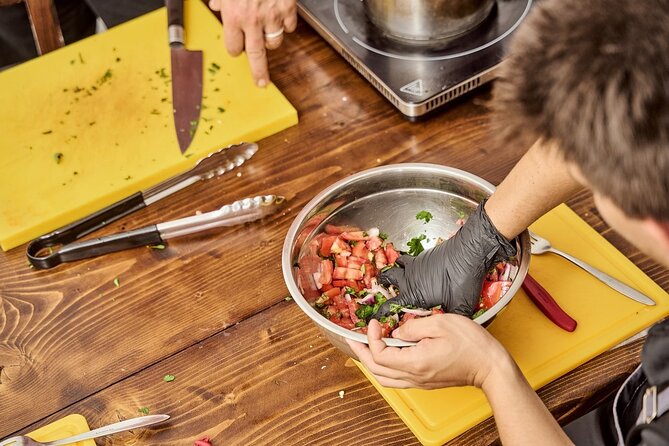
You’ll cook with an experienced chef who’s guiding you through the recipes, plus support from Eleanor. From the reviews, the teaching style reads as patient and communicative, which is a big deal if you don’t cook much at home.
Another practical point: the class runs about 2 hours. With that time, you need a pace that keeps moving—so a supportive team helps you stay on track. If you’ve ever joined a cooking class where you spend half the time waiting, you’ll appreciate a structure that keeps everyone working.
Your starter step: Santorinian salad as the flavor warm-up
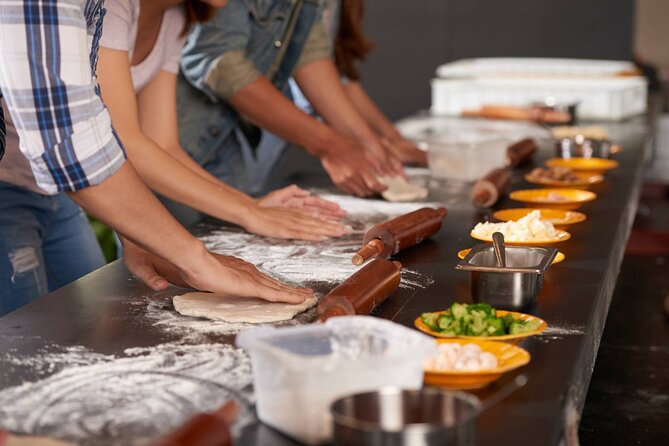
The menu starts with Santorinian salad. This matters because salads are often where Greek home cooking teaches you the rules: how to balance acidity, salt, and herbs so the dish doesn’t fall flat.
In a class setting, the salad is also a smart warm-up. You can get comfortable with fresh herbs and vegetables, then switch into the more hands-on cooking tasks with less intimidation. It’s a good start if you want to learn techniques, not just recipes.
Fava: the Santorini dish you’ll want to cook again
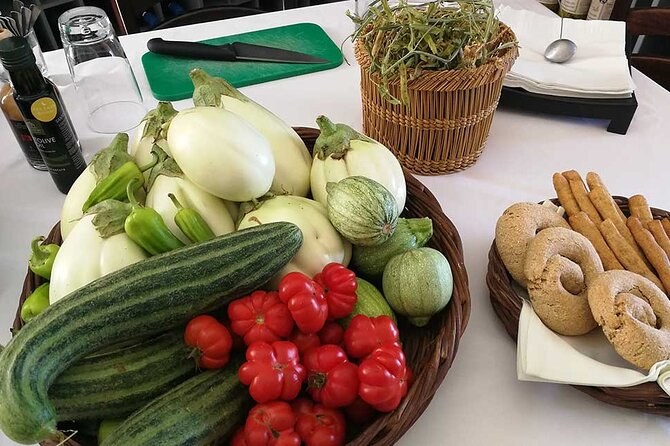
Next comes fava, one of the island’s signatures. Even if you’ve eaten fava before, cooking it yourself tends to change how you think about it. You’ll learn how it comes together as part of a larger Santorini meal, not as a stand-alone appetizer.
Why fava is so valuable in a class like this: it’s recognizable, but it’s also easy to get wrong at home if you don’t know the island approach. In this experience, fava isn’t treated like an afterthought. It’s a core main course, placed right where you’ll actually understand it through cooking.






Pork fillets with vinsanto sauce: comfort food with a local twist
Then you’ll cook pork fillets with vinsanto sauce. This is one of those dishes where the name sounds fancy, but the concept is very doable at home once you understand what the sauce is doing.
Vinsanto brings a sweet, mellow depth that turns pork into something more “island dinner” than plain roast. In the class context, this is helpful because you learn how the sauce ties into the meal as a whole—especially next to tomato-forward dishes.
Ntomatokeftedes (tomato fritters): the technique dish
The menu includes ntomatokeftedes, traditional tomato fritters. This is the kind of recipe many people love but rarely learn properly. Fritters are all about texture: the tomato mix, seasoning, and the frying outcome.
In this class, you’ll get the hands-on practice needed to make them feel less mysterious. Plus, tomato fritters are a great home win because they reheat well and work as a snack, side, or party food.
Santorini spaghetti with tomato paste and garlic: how the sauce becomes the meal
The final main on the menu is Santorini spaghetti with tomato paste and garlic. The focus here is the sauce base: tomato paste plus garlic, built to taste like it belongs to the island.
This part is especially useful if you want a recipe you’ll repeat. Pasta is the easiest way to bring Greek flavors into regular rotation, and tomato paste sauces tend to be forgiving when you’re cooking at home. Once you’ve built that base, you’ll know how to adjust it the next time you make it.
Pairing your meal with volcanic wines
Your meal includes drinks: wine, soft drinks, and water. The experience also frames wine pairing as part of the fun, calling out volcanic wines as the match.
Even without turning it into a sommelier lesson, the takeaway is practical: plan your meal to slow down. This class ends with you eating what you cooked together, so don’t rush. You’ll get more out of the experience when you taste the recipes while they’re still fresh in your mind.
What’s included (and how that affects value)
You’re paying $190.63 per person for a full 2-hour cooking-and-meal experience with:
- transfer from/to your pickup location (hotel, Rbnb, etc.)
- cooking materials, supplies, and tools
- drinks with the meal (wine, soft drinks, water)
- the complete meal after the lesson
That combination is what makes this feel like value, not just entertainment. Many cooking classes charge a similar amount but leave you handling transport and food costs separately. Here, transportation and drinks are folded into the price, and you leave with a full menu.
Pickup timing, cruise meeting point, and getting there smoothly
Pickup is offered from your chosen spot, and the departure time is set according to what you prefer when you book. If you’re on a cruise, your pickup point is at the cable car exit at the top.
The class is described as near public transportation, which is useful if you want backup options. And you’ll receive a mobile ticket, which makes it easier to show up without digging through paper confirmations.
For the best experience, do one simple thing: send your pickup time and pickup point clearly. It’s the fastest way to avoid a last-minute scramble.
Weather matters more than you might expect
This experience requires good weather. If it gets canceled due to poor weather, you’ll be offered a different date or a full refund. That’s a smart setup because the whole experience depends on conditions being right for the farm-to-table approach and the day’s flow.
So, if you’re visiting in a season where weather can swing, keep one buffer window in your itinerary for this sort of activity.
Who should book this Santorini cooking class
This is a great fit if:
- you want authentic Santorini recipes you can cook again at home
- you like hands-on activities more than museum-style touring
- you enjoy learning the “why” behind local staples like fava, tomato fritters, and tomato-garlic pasta
- you appreciate a small group setting that stays interactive
It may not be your best match if you hate cooking tasks, or if you only have enough time for quick photo stops and do not want to spend about two hours in a kitchen.
Should you book the Traditional Kouzina Santorini Cooking Experience?
I’d book it if you want a real skill, not just a meal. The menu hits multiple Santorini classics—fava, ntomatokeftedes, pork with vinsanto sauce, and tomato-garlic spaghetti—so you leave with a fuller flavor memory of the island. The small group size and the Chef Alexandra plus Eleanor support also suggest you’ll get help while you’re actively cooking.
Skip it only if you’re truly burned out on active lessons or you’re traveling with zero flexibility for weather. Otherwise, this is the kind of Santorini experience that turns into a story you can recreate at home.
FAQ
How long is the Traditional Kouzina Santorini cooking experience?
It lasts about 2 hours.
What is the price per person?
The price is $190.63 per person.
Is pickup included, and where does it start?
Yes. Transfer from and to your pickup location (hotel, Rbnb, etc.) is included. For cruise customers, pickup is at the cable car exit at the top.
What languages is the cooking experience offered in?
It is offered in English.
What does the class include?
Included are the transfer, cooking materials and tools, drinks (wine, soft drinks, and water), and the complete meal after the cooking lesson.
What recipes are on the menu?
The sample menu includes Santorinian salad, fava, pork fillets with vinsanto sauce, ntomatokeftedes (traditional tomato fritters), and Santorini spaghetti with tomato paste and garlic.
Is the meal included at the end?
Yes. You enjoy a complete meal after the cooking lesson.
What happens if the weather is poor?
The experience requires good weather. If it’s canceled due to poor weather, you’ll be offered a different date or a full refund.