REVIEW · HISTORICAL TOURS
Santorini History & Archeology Tour
Book on Viator →Operated by The Tourist · Bookable on Viator
Volcanic time puts history on your feet. This small-group Santorini tour strings together Ancient Thera, the Akrotiri excavations, and the Museum of Prehistoric Thira, with admission tickets handled and your morning anchored by expert guidance. I like that the price covers entrance fees across the stops, and I really like the dedicated time at Akrotiri with a licensed, private guide.
One catch: you’ll need moderate physical fitness, since parts of the route involve walking around ancient ruins and getting up to views above the sea. Also, there’s no lunch planned, so plan to eat after the tour or bring a snack to tide you over.
In This Review
- Key highlights to look for
- Ancient Thera + Akrotiri + Prehistoric Thira: why this combo works
- 9:00 am pickup and a ride that keeps you sane
- Stop 1: Ancient Thera on Mesa Vouno (the view-and-walk opening)
- Stop 2: Akrotiri Archaeological Site (where the licensed guide shines)
- Stop 3: Museum of Prehistoric Thira (the finds get their meaning)
- Price and value: what you’re paying for at $289.40
- Who this tour suits best (and who may want a different plan)
- Timing tricks that make the day easier
- Should you book Santorini History & Archeology?
- FAQ
- FAQ
- How long is the Santorini History & Archeology Tour?
- What sites are included in the tour?
- Is admission included in the price?
- Is there pickup?
- Is the Akrotiri visit guided?
- Is lunch included?
Key highlights to look for
- Ancient Thera on Mesa Vouno: high-elevation ruins with big 9th century BC context
- Akrotiri gets the star treatment: a private guided visit by a licensed archaeologist
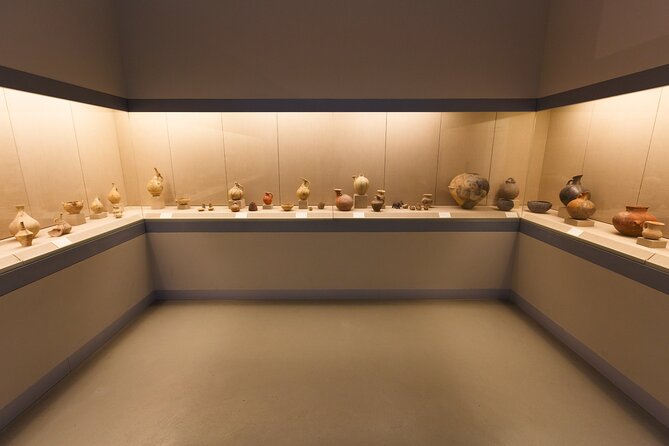
- Prehistoric Thira Museum ties it together: museum time helps the finds click into a timeline
- Early start helps with comfort: you begin at 9:00 am and move before the hottest stretch
- All entrance fees are included: you avoid the add-on ticket math
- Group size stays small: max 8 travelers, so questions are easier to fit in
Ancient Thera + Akrotiri + Prehistoric Thira: why this combo works
Santorini is famous for sunsets, but this tour hits the side of the island that made people stop, study, and rebuild. You’re not just visiting three random sites. You’re walking through a story: settlement life, excavation clues, and then the museum explanations that put those clues into order.
The value here is the sequencing. Ancient Thera gives you the Greek island setting. Akrotiri shows you a much earlier, very advanced community. Then the Museum of Prehistoric Thira turns artifacts into understanding, so your photos have context instead of just shapes and walls.
This also makes a good option if you’ve already done the usual island highlight circuit and want something more grounded. If you like history that’s tied to places you can actually walk through, this schedule does that well.
You can also read our reviews of more historical tours in Santorini



9:00 am pickup and a ride that keeps you sane
The day runs for about 5 hours, starting at 9:00 am. Pickup is offered, and the tour uses an air-conditioned vehicle—important on Santorini, where the ground heat can feel intense even when the air looks mild.
You also get bottled water (500 ml per person) plus refreshments during the trip, such as orange juice and Coca-Cola or similar options. It’s a small thing, but it matters when your day starts with uphill walking. I like having those basics handled, because it lowers the mental load: you don’t spend your morning hunting for drinks.
Group size is capped at 8 travelers. That usually means less shuffling around and more time to hear explanations without the “tour conga line” feeling.
Stop 1: Ancient Thera on Mesa Vouno (the view-and-walk opening)
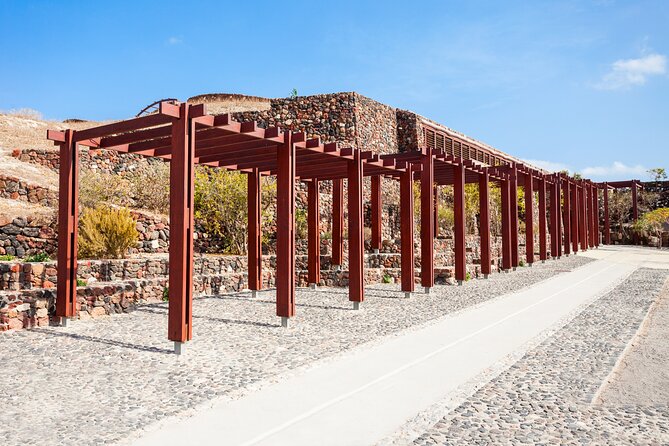
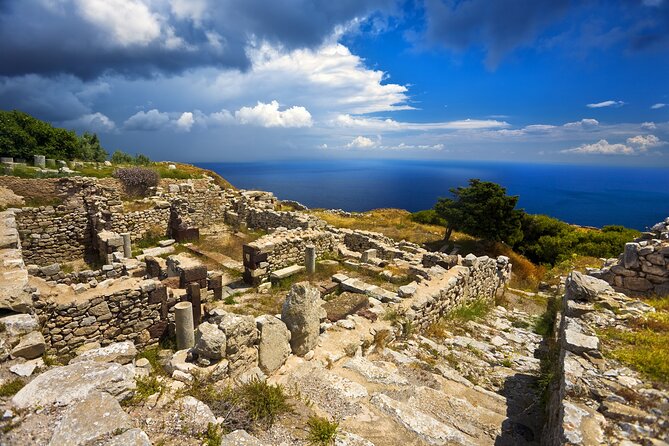
Ancient Thera sits high on the mountain called Mesa Vouno, reached at about 400 meters above sea level. The tour blocks about 1 hour here, and it’s set up as your first big orientation moment.
You’ll see a city founded by Theras in the 9th century BC. That detail is useful because it gives you a framework right away: you’re not wandering in confusion, trying to guess what era you’re looking at. Instead, you have a starting point for how Greeks shaped island life over time.
What I like about this stop is the way it balances walking with perspective. Even if you don’t consider yourself a “ruins person,” the elevation helps you understand why these places were built where they were. You get the sense of control—over routes, over vantage, over the practical reasons people settled there.
What to consider: if you’re not comfortable with uneven ground or hillside paths, plan for slower pacing. The tour asks for moderate physical fitness, so wear real walking shoes, not flip-flops.
Stop 2: Akrotiri Archaeological Site (where the licensed guide shines)
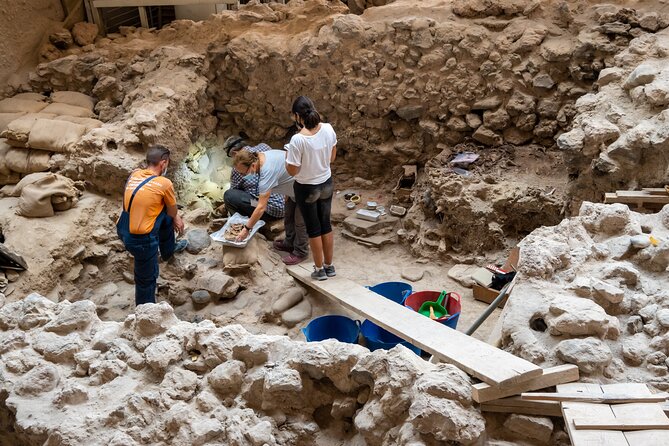
Akrotiri is the reason many people book Santorini archaeology in the first place. This site dates back to the 5th millennium BC, and the whole point of the visit is to show you how sophisticated the community was—cultural and technical achievements that feel surprisingly modern when you’re standing in the excavated spaces.
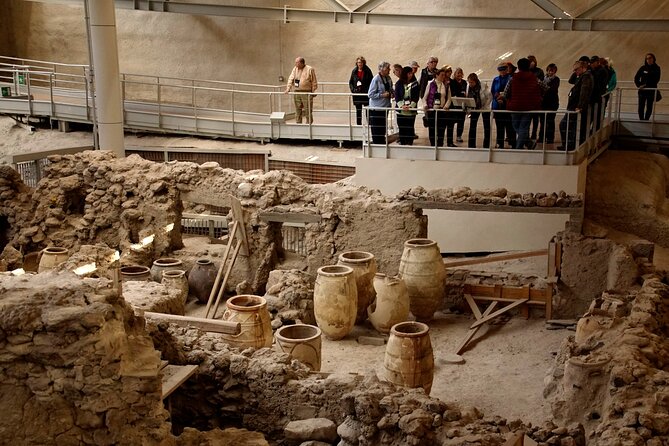
The tour gives about 2 hours total for Akrotiri, with a private guided tour inside the excavations lasting about 1.5 hours minimum. That private guided time is a major part of the value. You’re not just following a group around and hoping the explanations catch up. You’re getting a focused walk with a licensed professional who can point to details and explain what they mean.
Also, Akrotiri needs good interpretation. Without guidance, it can look like piles, walls, and roofless rooms. With guidance, it starts to feel like a working town—how people lived, moved, built, and adapted. The licensed guide can connect the physical remains to why they matter.
Guides have varied by group, and past tours were led by people like Tasos and Ted, with excellent narrative pacing and strong on-site clarity. In particular, I’d treat this stop as the heart of your learning. If you want the explanation-heavy experience, this is where you’ll get it.
Practical tip: Akrotiri walking happens outdoors around archaeological areas. Bring a hat and plan for sun. Even with early timing, you’ll still want to dress for heat.
Stop 3: Museum of Prehistoric Thira (the finds get their meaning)
After Akrotiri, the Museum of Prehistoric Thira is where everything starts clicking. You’ll spend about 1 hour here, and admissions are included.
The museum’s main job is to show you the finds from Akrotiri excavations and place them alongside important items from other key Santorini sites. That’s the difference between seeing objects and understanding what they represent. This hour works especially well right after the excavation walk, because you can mentally connect what you saw outside to what you’re now holding in your mind.
The museum also gives you a break from outdoor walking. It’s air-conditioned, which is a real benefit in the middle of a Santorini day. If you’re the kind of person who likes to cool down, re-center, and then keep learning, this stop does that.
What to consider: one hour is enough for the museum highlights, but it’s not a full museum marathon. If you’re the type who could happily spend half a day with every display panel, you may want to plan a return visit later on your own.





Price and value: what you’re paying for at $289.40
At $289.40 per person, this is not the cheapest thing on Santorini. But the price makes more sense when you look at what’s included.
Here’s what you’re getting that typically costs extra on other tours:
- Entrance fees included for all archaeological sites and the museum
- Air-conditioned vehicle plus bottled water and refreshments during the trip
- A licensed, private guided visit inside Akrotiri lasting about 1.5 hours minimum
- Pickup offered, which removes the headache of getting to trailhead-type locations on your own
The “private” portion at Akrotiri is usually the biggest driver of value. A guided visit that’s long enough to explain details and connect them to the bigger story beats the short, rushed stop at most general sightseeing tours.
The other value factor is group size. Max 8 travelers means the guide can move at a human pace. If you’ve ever been in a bigger group where you stop hearing explanations when you fall behind, you’ll appreciate the smaller setup here.
Only clear downside in the value math: lunch isn’t included. You can still manage easily, but you’ll want a plan for food afterward.
Who this tour suits best (and who may want a different plan)
This tour is a strong fit if you:
- love history and want it explained in a place-by-place way
- want Akrotiri with proper licensed interpretation, not just a quick look
- enjoy a structured route that keeps you moving through eras instead of random stops
- like small-group touring where questions aren’t swallowed by crowds
It’s less ideal if you:
- struggle with uneven ground or hillside walking (moderate physical fitness is required)
- want a long, unhurried beach-and-sun day rather than a focused morning-to-early-afternoon plan
- need lunch included in the schedule
If you’re traveling with mixed preferences—someone who wants archaeology plus someone who just wants views—you may still make it work. Ancient Thera can satisfy the view-seekers, while Akrotiri and the museum satisfy the history fans. Just keep expectations clear: this isn’t a slow-sunset cruise type of outing.
Timing tricks that make the day easier
Even though this is only about 5 hours, the order matters.
Starting at 9:00 am helps you beat the worst of the day’s heat. It also gives you energy to take in both outdoor sites before you switch into the air-conditioned museum time. This rhythm keeps the day from feeling like you’re constantly boiling in the sun.
Also, the tour’s structure is designed to alternate walking with explanation and then indoor museum time. That makes it more comfortable than a tour made of three outdoor-only stops.
My practical advice: bring sunscreen, a hat, and water habits you can keep. Even though bottled water and drinks are included, you’ll still feel better with your own sunscreen strategy and a calm pace.
Should you book Santorini History & Archeology?
I’d book this tour if you’re serious about history and want a guided experience that connects the dots across eras. The combination of Ancient Thera, Akrotiri with a private licensed guide, and the Museum of Prehistoric Thira is exactly the kind of plan that makes ruins feel like stories instead of static stones.
I wouldn’t book it if you’re mainly chasing sunsets, beaches, and leisurely hours, or if you don’t want any uphill walking. Also, if you hate the idea of working around a no-lunch schedule, you’ll want to plan food right after.
One more decision helper: if you’re the type who likes to leave a place understanding what you saw, this tour is built for you. The guided Akrotiri time and the museum stop are the two “learning anchors” that turn the morning into more than sightseeing.
FAQ
FAQ
How long is the Santorini History & Archeology Tour?
It runs for about 5 hours.
What sites are included in the tour?
You visit Ancient Thera, the Akrotiri Archaeological Site, and the Museum of Prehistoric Thira.
Is admission included in the price?
Yes. Entrance fees for the archaeological sites and museum are included.
Is there pickup?
Pickup is offered, and the tour starts at 9:00 am.
Is the Akrotiri visit guided?
Yes. You get a private guided tour inside Akrotiri led by a licensed tour guide, lasting about 1.5 hours minimum.
Is lunch included?
No. Lunch is not included.