REVIEW · AKROTIRI & ARCHAEOLOGICAL SITE TOURS
Santorini: Akrotiri Entry Ticket and Audio Guide
Book on GetYourGuide →Operated by Clio Muse Tours · Bookable on GetYourGuide
Akrotiri feels like time travel with footpaths and stories. This self-guided visit turns the Bronze Age ruins into a walkable narrative, using a phone audio guide and an entry ticket that lets you roam at your own speed. I like that the site is physically well set up, and you’re not stuck with a rigid tour pace.
What I especially loved is how clearly the visit explains the layout of the town—from street patterns to key places like the Square of the Double Horns and the House of the Ladies. Second, the best part for many people is the audio itself: you can pause, rewind, and replay, and it’s designed to be used offline so you can keep going without constant signal hunting. One watch-out: the audio can be harder to follow if you’re not standing exactly where the narration expects, and some sections may be blocked off on the day you go.
In This Review
- Key things to know before you go
- Akrotiri: a city frozen under ash (and why that matters)
- Your entry ticket plus phone audio: how the visit actually runs
- Picking your timing: museum vs. site entrance and why you should care
- What you’ll see: the town layout, squares, and restored spaces
- The Xeste residences: affluent homes explained in plain language
- “Pompeii of the Aegean”: what that label gets right
- The audio guide experience: strengths, and where it can trip you up
- How to make it feel smooth: my practical checklist
- Value and price: is $41 worth it?
- Who should book this and who might prefer a live guide
- Should you book Akrotiri with this entry ticket and phone audio?
- FAQ
- How long is the Akrotiri entry with the audio guide?
- Where do I start the audio tour?
- Is there a live guide included?
- What languages are available for the audio tour?
- Do I need an internet connection during the visit?
- What equipment should I bring?
- What phone types are supported?
- Is the audio tour available after I download it?
- Is the entrance time slot strict?
Key things to know before you go
- Offline audio that you can reuse: download and activate it ahead, then replay anytime before or after your visit
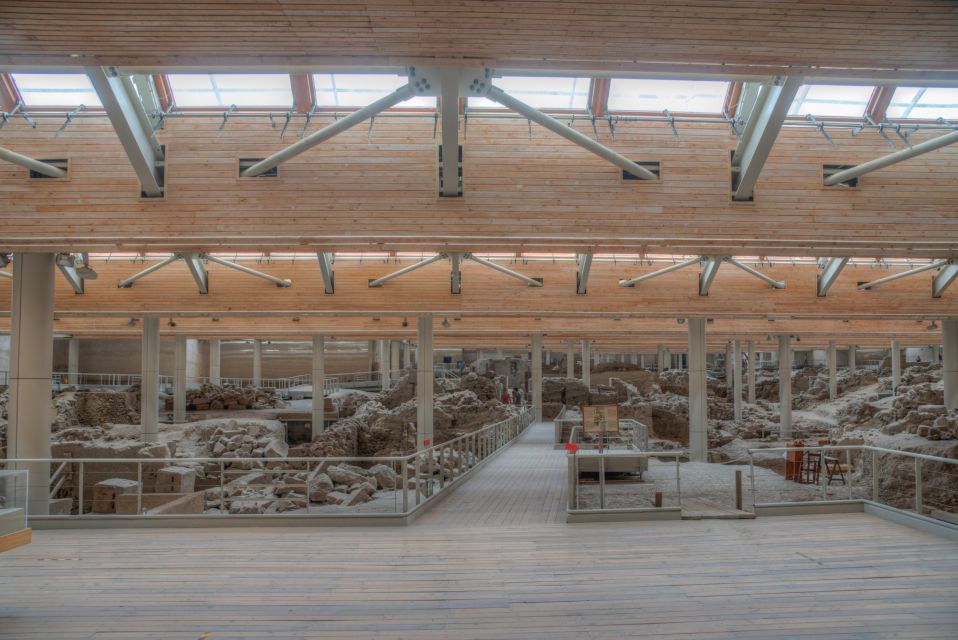
- A tented, shaded site: the ruins sit under a large shelter, so hot-day touring is easier
- Town highlights built into the story: expect stops like the Square of the Double Horns and the House of the Ladies
- Xeste residences and daily-life details: the guide focuses on affluent homes and what everyday life might have looked like
- Self-guided, no live Q&A: it’s on your schedule, but you won’t get real-time answers from a person
- Phone compatibility matters: Windows phones and older iOS models aren’t supported, and you’ll need storage for the download
Akrotiri: a city frozen under ash (and why that matters)
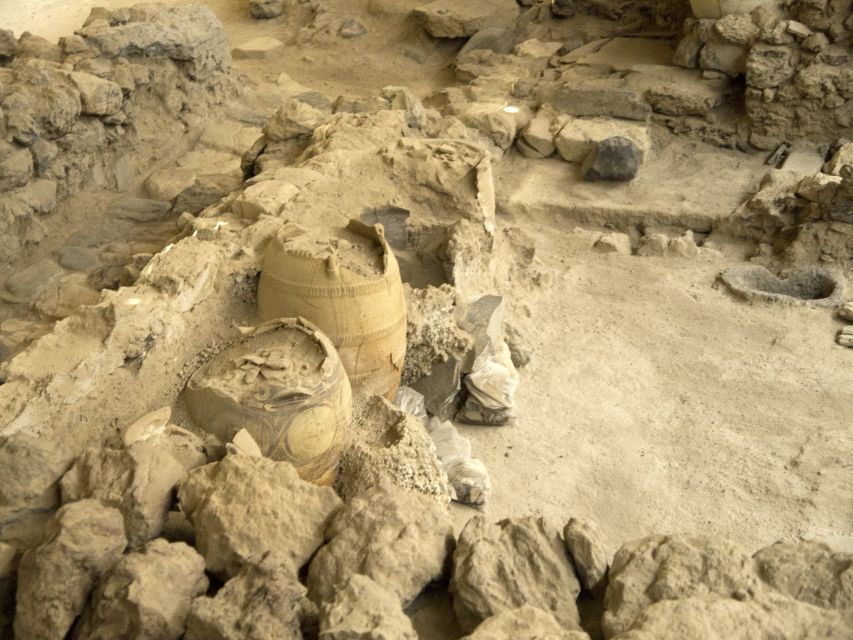
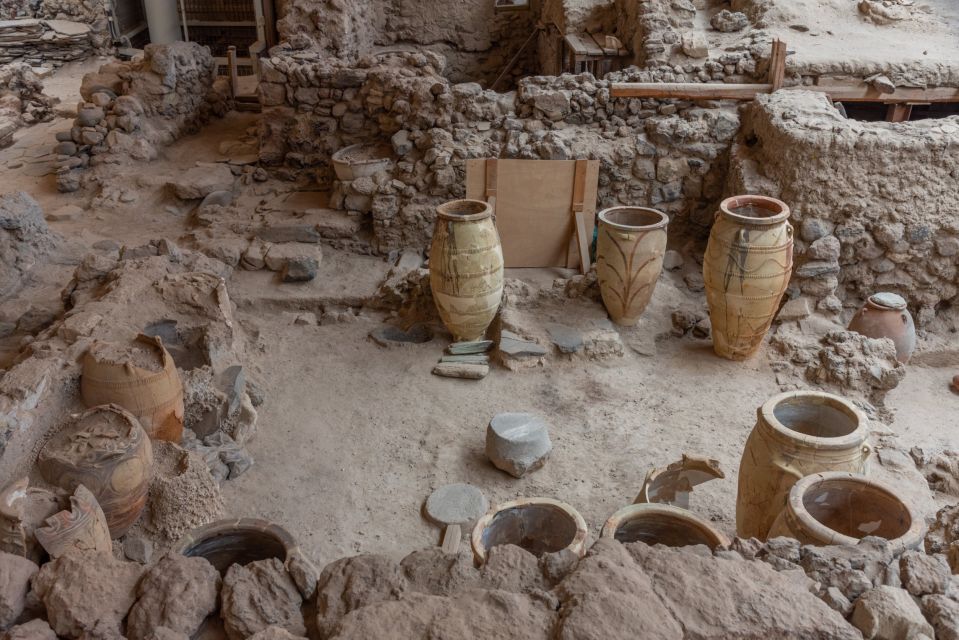
Akrotiri is Santorini’s Bronze Age shocker: a whole town was buried by volcanic activity, and what survived gives you a rare snapshot of daily life. Instead of just seeing scattered ruins, you walk through something that feels planned—streets, house groupings, and public squares—like the eruption interrupted an ordinary routine and then sealed it.
That frozen-in-time feel is the main reason this works so well with an audio guide. The narration doesn’t just describe walls. It helps you connect the physical layout to the human scale: where people would have moved, how homes were organized, and why certain places matter in the story of Akrotiri.
You can also read our reviews of more tours and experiences in Fira.



Your entry ticket plus phone audio: how the visit actually runs
This experience is built around two parts: an entry ticket to Akrotiri and a self-guided audio tour on your smartphone. There’s no live guide, and there isn’t a roaming group to shepherd you from one viewpoint to the next. You start the audio inside Akrotiri, then follow the path and stop points at your own pace.
Before you go, you’ll need to download the app content and the audio tour. The good news is that the tour includes offline materials—text, narration, and maps—so you’re not stuck paying for data or searching for a signal once you’re inside the site. The download needs space too, about 100–150 MB, so it’s worth checking your phone storage early.
The practical downside is also straightforward: because it’s designed for a specific walk order and reference points, the experience can get frustrating if you’re moving faster than the audio expects or if parts of the route are roped off on the day you visit. You’ll still see plenty, but the audio may feel like it’s talking a bit ahead of your eyes.
Picking your timing: museum vs. site entrance and why you should care
Your booking includes a time slot for your entrance to the Museum, but it also says you can enter the Archaeological Site anytime on your selected date. That matters because Akrotiri works best when you’re not rushing. If you’re aiming to take photos, pause often, or read the display captions carefully, you’ll want extra breathing room.
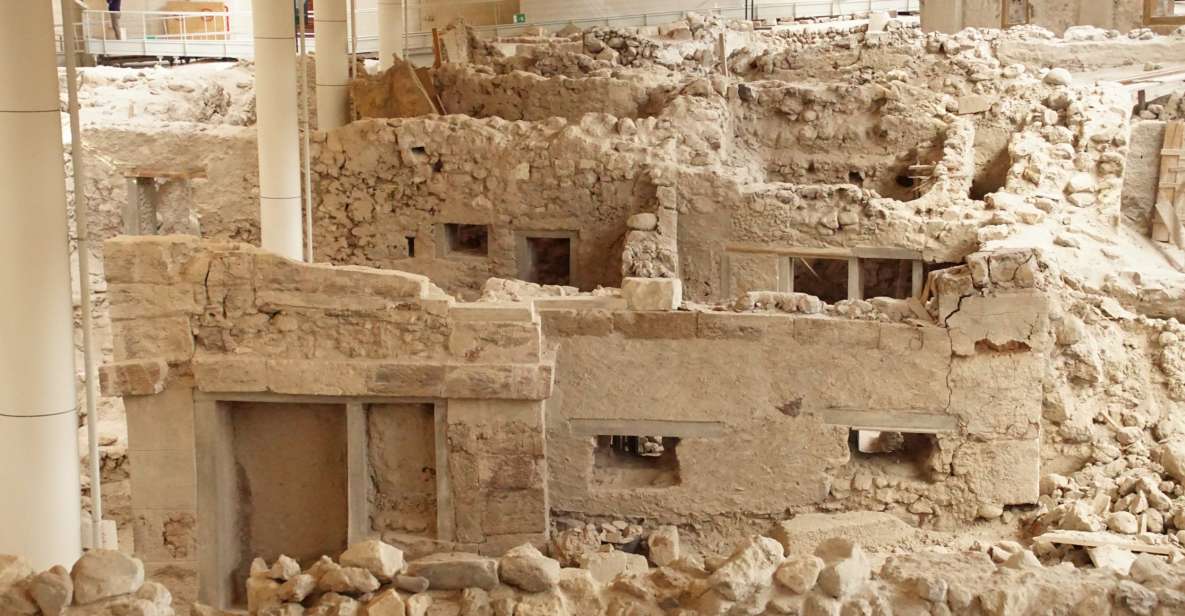
Also, this site is under a large tent that provides shade at all times. That’s a big deal if you’re visiting during the hotter parts of the day. You’ll still want sunscreen because the experience won’t feel like direct sun all the time, but you can’t fully ignore skin and dehydration basics.
What you’ll see: the town layout, squares, and restored spaces
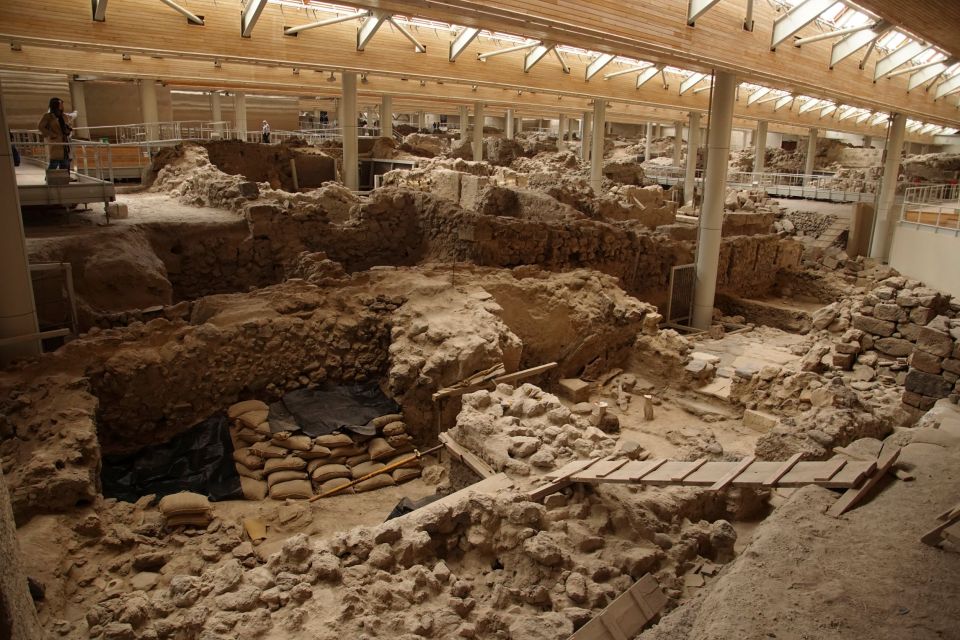
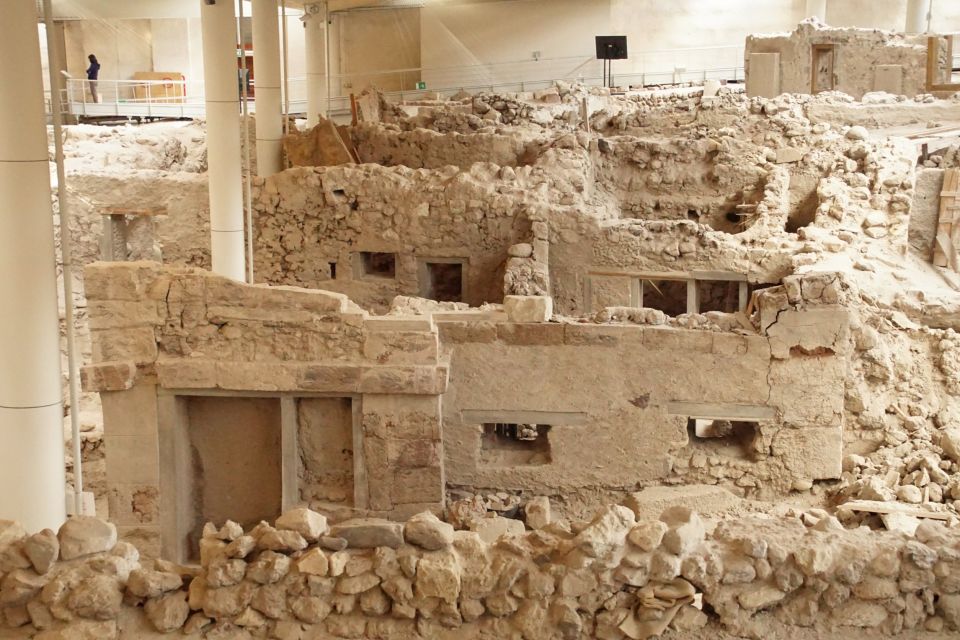
The heart of Akrotiri is the way the excavation site tells you the town plan. You’re walking through an underground-like logic of streets and building foundations that were preserved beneath ash. Even when you can’t see the original structures in the exact way they once stood, you can still read the town as a functional place, not just a collection of stones.
Key highlights in the audio include the Square of the Double Horns. This kind of named public space is where the narration helps most, because you start thinking beyond architecture. Instead of asking only What am I looking at?, you start asking What would people do here? That shift makes the ruins feel less cold.
You’ll also hear about the House of the Ladies. This is one of those locations that turns a floorplan into a story about residents, household life, and the way different rooms might have been used. If you like archaeology when it becomes human—food routines, family spaces, everyday movement—this part tends to click.
The Xeste residences: affluent homes explained in plain language
One of the strengths of the audio is the focus on Xeste, the affluent residential areas. The guide is designed to take you through the homes as systems: how rooms connect, how people lived, and how wealth showed up in domestic architecture.
This is where the audio’s structure can be both a plus and a challenge. It can feel extremely clear when you’re following along at the right spots and when signage and rope barriers still line up with the narration’s references. When you’re off by a few steps—or the path is temporarily altered—it can get harder to match what you hear to what you see.
My practical suggestion: don’t treat the audio like a background playlist. Use it like a set of directions. Pause the narration if you need a moment to identify the next area. Look for posted info, room edges, and the shape of the street grid so you keep your bearings as the story changes.
You can also read our reviews of more guided tours in Fira






“Pompeii of the Aegean”: what that label gets right
People call Akrotiri the Pompeii of the Aegean for a reason: both sites offer a preserved window into past life after sudden disaster. The comparison is useful, but it can also set expectations that the ruins will feel identical in scale or mood. Akrotiri’s personality is different because it’s earlier in time and it was preserved under a different kind of ash and burial process.
The audio guide leans into this comparison as a framing device: it wants you to understand why this site is important for studying prehistoric residential life. You’re not just touring; you’re learning how archaeologists interpret buildings, layout choices, and the survival of certain materials.
If you’ve visited Pompeii before, you might find Akrotiri smaller in feel. What you often gain in return is a different time depth and a strong emphasis on domestic spaces. It becomes a story about how people built, lived, and then left—possibly with increasing urgency—as the volcano’s activity worsened.
The audio guide experience: strengths, and where it can trip you up
Let’s give credit where it’s due. The audio is designed with repetition in mind. You can stop and rewind whenever you need to, and that flexibility is perfect for slower walkers or people who want to read a plaque first and then listen to the explanation after.
The other win is that the audio tour is available in English, French, Italian, and German. That wide language availability helps if you’re traveling with someone who doesn’t want to rely on the site’s captions alone.
Now for the real-world snag points. Some portions of the audio reference points you might not see directly here, because certain items may live in museums in other cities. In those moments, the story still matters, but your eyes may feel unpaired with the narration. Also, if areas are roped off, you may have to adjust your position, and that can throw off the audio’s sense of where you should be.
Finally, there’s the device issue. This audio is not compatible with Windows phones, and it also won’t work on older iPhone/iPod/iPad models listed by the provider. Even if your phone is supported, you must download the tour and allow enough storage space before you arrive.
How to make it feel smooth: my practical checklist
You don’t need a complicated strategy. You just need the boring basics handled so the story stays uninterrupted.
- Download before you arrive: use the activation link from your email and make sure the audio is fully available offline
- Bring headphones: they aren’t included, so pack a pair you trust
- Charge your phone: the instructions clearly expect you to have a charged smartphone
- Wear comfortable shoes: even under shelter, you’re walking through a structured site with lots of stopping
- Expect rope barriers: if a section is closed, plan to pause and skip ahead mentally rather than forcing the exact audio sequence
If you want the best experience, don’t try to do everything at maximum speed. Akrotiri rewards a slower rhythm because the audio is built as a sequence of observations.
Value and price: is $41 worth it?
At $41 per person, you’re paying for two things: entry to the Akrotiri prehistoric site and an offline self-guided audio tour for supported smartphone platforms. For me, the value comes from avoiding the biggest hassle at places like this: you can stand in front of an intriguing room or square and still know what you’re looking at.
If you’re the type who enjoys reading captions, you could arguably get an overview without the audio. But the audio’s purpose here is very specific—it’s meant to explain layout, residences like Xeste, and everyday life stories that the site signage can’t carry in full. If that kind of context matters to you, the audio isn’t an extra. It’s part of the experience.
If you strongly prefer a live guide with Q&A, then $41 may feel like you’re buying the substitute rather than the thing you want. Since there’s no live guide included, you’ll be stuck with your own interpretation, unless the site signage is enough for your style.
Who should book this and who might prefer a live guide
This is a great fit if you want freedom. You’re flexible with time slots, you enjoy stopping and starting, and you like connecting the dots between ruins and daily life. It’s also a strong choice for mobility because the site is wheelchair accessible and sheltered.
It’s less ideal if you hate being tethered to a phone. The audio needs your attention, and some people find it tricky to match narration to exact locations, especially if sections are closed. If you’re going on a day with route changes, you might feel like you’re playing catch-up.
Also, if you’re the kind of visitor who wants to ask questions, a self-guided format leaves that gap. You can still learn a lot from the audio, but there’s no chance to clarify confusion with a human guide on the spot.
Should you book Akrotiri with this entry ticket and phone audio?
Book it if you want the most guided experience possible without paying for a live guide. The audio’s repeatability, offline setup, and focus on town layout and domestic life are the big reasons it’s worth your time. The shelter under the large tent is another practical win.
Skip or reconsider if you know you get frustrated when a tour references exact positions and the route isn’t perfectly aligned. In that case, a plan that relies more on signage might feel less stressful.
Bottom line: for most people, the combination of Akrotiri entry plus a reusable offline narrative is a smart way to turn ruins into a story. Just do the phone setup carefully before you arrive, bring headphones, and give yourself time to pause where the site demands it.
FAQ
How long is the Akrotiri entry with the audio guide?
The activity is listed as lasting 1 day. The audio tour is self-guided and can be used repeatedly.
Where do I start the audio tour?
You start the audio guide tour inside Akrotiri.
Is there a live guide included?
No. This is a self-guided audio experience on your smartphone.
What languages are available for the audio tour?
The audio tour is available in English, French, Italian, and German.
Do I need an internet connection during the visit?
The tour includes offline content (text, audio narration, and maps), which is intended to help you avoid roaming charges. You still need to download/activate it before use.
What equipment should I bring?
Bring your own smartphone and headphones. Also bring comfortable shoes and sunscreen, plus a charged phone.
What phone types are supported?
It works on Android (version 5.0 and later) and on supported iOS devices. It is not compatible with Windows phones, and it won’t work on older iPhone/iPod/iPad models listed in the requirements.
Is the audio tour available after I download it?
Yes. The audio tour can be used repeatedly and at any time, before or after your visit.
Is the entrance time slot strict?
The time slot is binding for your entrance to the Museum portion. You can enter the Archaeological Site anytime on your selected date.