REVIEW · CALDERA, VOLCANO & HOT SPRINGS CRUISES
Discover Scuba Diving in the Caldera of the Volcano in Santorini
Book on Viator →Operated by Santorini Dive Center · Bookable on Viator
Breathing underwater in a volcano crater is surreal. This beginner-friendly scuba session happens right at Caldera Beach in Akrotiri, inside the crater area at the water’s edge, so you start fast. I like the max group size of 10, which keeps things calm and personal. One drawback: if you’re prone to panic, you should plan for that initial nerves phase, and yes, your mask can fog or leak a bit at first.
My favorite part is how they teach you before you go farther: a short 20-minute briefing covers hand signals and equipment use, then you practice in very shallow, waist-deep water. You’ll get about 35 minutes underwater total with an instructor right there to keep you steady and safe.
In This Review
- Quick takeaways before you book
- Scuba training at Santorini’s volcano caldera beach
- Your start times and the real on-the-clock plan
- Equipment and instruction that actually matter for first-timers
- First breaths in waist-deep water: where nerves turn into control
- The guided reef swim: fish, rocks, and clear caldera water
- Why the max 10-person group feels different
- Price and value: what $108.84 includes in the real world
- The 12-hour flight rule fits your Santorini travel plan
- Who this is best for (and when to think twice)
- Should you book this Santorini volcano caldera experience?
- FAQ
- How long is the experience?
- What time does the scuba session start?
- What’s the group size?
- Is this for beginners?
- Do I get equipment, or do I need to bring my own?
- Where does the activity start?
- How much time will I spend underwater?
- Can I fly soon after the session?
- Are service animals allowed?
- What happens if the weather is poor?
Quick takeaways before you book
- Inside the crater setting: start at a beach station in Akrotiri with water nearby.
- Small group (max 10): more attention, fewer distractions.
- Beginner-focused training: basic principles, key hand signals, and gear practice before any deeper water.
- Underwater time is real but manageable: about 35 minutes underwater total.
- Safety support in the water: extra staff presence is part of the setup for peace of mind.
- Travel note: after your session, avoid flying for 12 hours.
Scuba training at Santorini’s volcano caldera beach
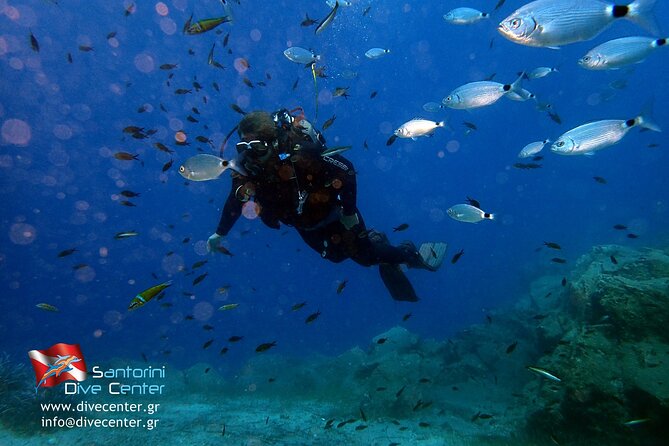
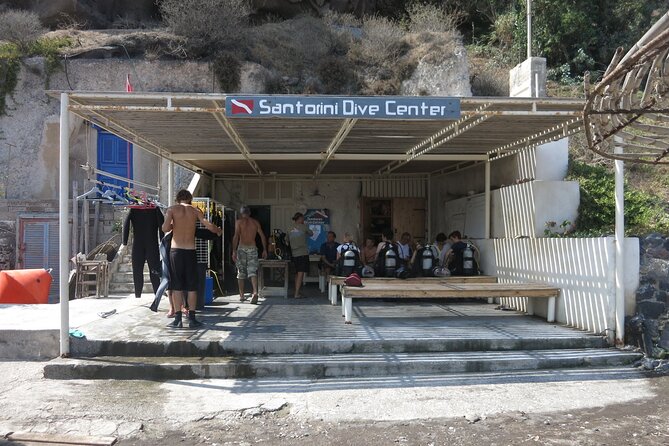
Santorini can feel like it’s all views from above. This experience flips that. You start where the geology is the story: the meeting point is in Akrotiri at Caldera Beach, at a beach station that sits within the crater area, just in front of the sea.
The location matters for two reasons. First, it cuts down on logistics. You don’t waste time on long transfers. Second, it gives you an immediate sense of the environment you’re about to enter: volcanic rock edges, shallow entry, and that clean caldera water that looks promising right away.
It also sets expectations. This isn’t about “toughing it out.” It’s about learning control in a safe place. You’ll be guided from the moment you show up until you’re comfortable enough to follow the instructor underwater near the reef.
You can also read our reviews of more scuba diving tours in Santorini
Your start times and the real on-the-clock plan
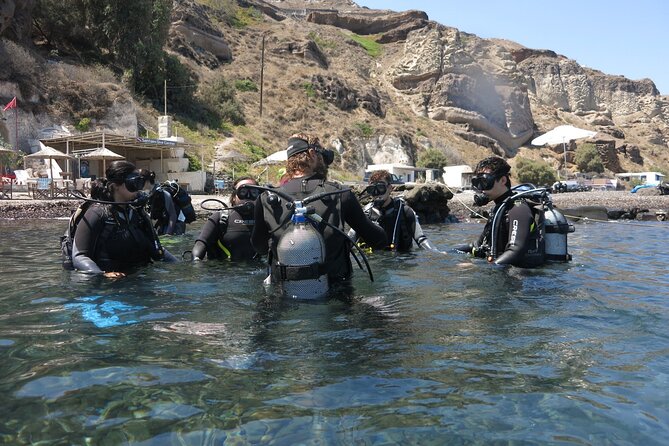
There are two daily start options: 10:00 or 13:00 from their beach station. The tour is listed at about 2 hours 30 minutes total on your schedule, but the active portion is shorter—around 2 hours—with a ~20-minute briefing before the water.
Here’s what the timing feels like in practice:
- You arrive, meet the instructor, and get the classroom-style basics.
- You go into wetsuits and gear.
- You walk right into the water from the beach (no long boat ride needed).
- You spend your main underwater time totaling about 35 minutes.
If you’re building a day around it, I’d plan a little buffer. The schedule can be tight because it moves from briefing to gear to first breaths. Also remember the weather requirement: if sea conditions are poor, the provider may shift your date or offer a refund.
Equipment and instruction that actually matter for first-timers
This is a “learn the basics” format. They teach you the core scuba principles, the important underwater hand signals, and how to use the equipment—so you’re not guessing once you’re below the surface.
All equipment is provided, which is a big deal for value. In Greece, buying gear separately can quickly turn a simple excursion into a bigger spending project. Here, you’re paying for the full package: instruction plus gear plus a guided underwater experience.
What I appreciate from the way the program is described—and backed up by firsthand accounts—is that the teaching is paced. People mention instructors taking time, doing calm baby steps, and checking in frequently. Some names show up clearly in the experience accounts: Barak is described as patient and thorough, and Zoe is described as especially patient for first-timers and refresher divers.
Also, they bring extra eyes in the water. That shows up as “an extra instructor following us” in the accounts. For beginners, that’s not just a nice-to-have. It’s the difference between feeling like you’re on your own and feeling like you have a safety net.
First breaths in waist-deep water: where nerves turn into control
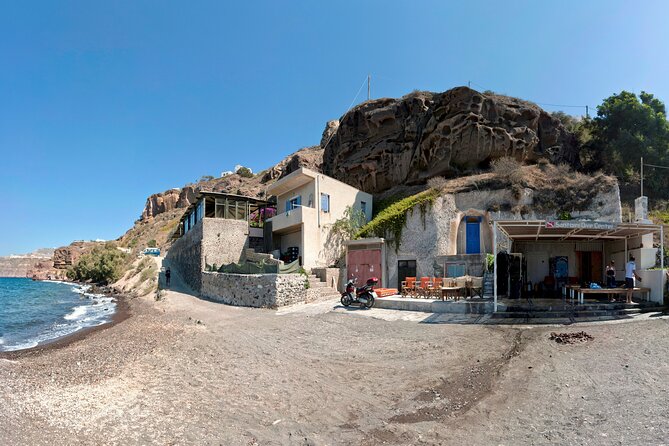
Before you go anywhere exciting, you stop shallow—about waist deep—and take your first breaths underwater. This part matters more than most people think. Your brain needs to sync up with the new sensations: breathing rhythm, gear feel, and buoyancy basics.
You also practice the “don’t rush” skills:
- how to breathe steadily through the regulator
- how to follow hand signals
- how to stay oriented while wearing the mask and equipment
From the first-timer accounts, expect a normal learning curve. Even when instruction is excellent, adjusting to breathing underwater can take a minute. Masks can fog. Some people mention water getting into the mask and limiting visibility early on.
That’s exactly why the shallow practice is included. If something feels off, you can correct it right away without committing to deeper water. You get to build trust step by step.
The guided reef swim: fish, rocks, and clear caldera water
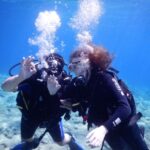
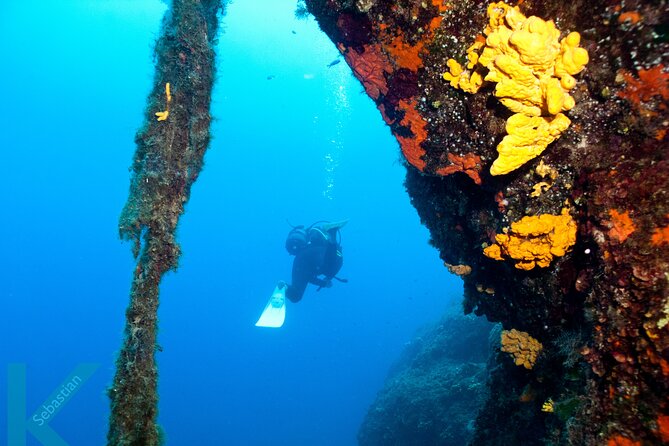
Once you’re comfortable, you follow the instructor for a guided underwater session in the nearby reef area. The water time is about 35 minutes total underwater, which is long enough to feel like an actual experience, but short enough to keep it beginner-friendly.
What you’re likely to see is the kind of underwater “Santorini, but sideways” scene you came for:
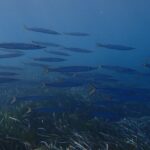
- lots of small fish
- volcanic rock and seabed textures
- clear visibility when conditions cooperate
People mention especially clear water and plenty of fish life along the reef. They also mention common volcanic-sea personalities like curious fish moving through rocky edges. If you’re hoping for dramatic coral walls, this isn’t sold that way. The focus here is learning and safe comfort—then letting you enjoy what the area offers.
A neat touch: some accounts mention GoPro-style photos or videos. If picture-taking matters to you, it’s a bonus because you’ll be busy learning and it’s hard to manage a camera while you’re coordinating breathing and buoyancy.




Why the max 10-person group feels different
A scuba course can get chaotic fast if the group is too big. This one limits the group to 10 travelers, capped to keep it personal.
That size changes your experience in small ways that add up:
- you get faster attention during equipment fitting
- instructors can monitor breathing and comfort more closely
- you’re less likely to get lost in the crowd when practicing signals
In the accounts, that personal feel shows up repeatedly. People talk about staff taking their time, staying patient, and making first-timers feel safe. One account even notes the staff felt extra safe because an additional instructor was tracking along in the water.
If you like small-group travel—good communication, no waiting around, and a higher chance of remembering your instructor’s name—this is the right setup.
Price and value: what $108.84 includes in the real world
At $108.84 per person, you’re paying for a lot more than a “try it once” photo moment. The package includes:
- beginner scuba instruction (including hand signals)
- all equipment
- guided underwater time near the reef
When you compare it to typical standalone costs—rental gear, lessons, and an organized guide—the value starts to make sense. You’re basically buying a guided intro course with gear bundled in.
You’re also buying time efficiency. Starting right at Caldera Beach means you aren’t paying with your afternoon for transport. That’s a sneaky way a tour saves money: time is expensive when you’re on Santorini schedules, especially if you’re trying to fit in a sunset, a winery, or a hike.
The other value point is the attention to comfort. Multiple accounts say instructors slowed things down for nervous first-timers. If you’re scared of being underwater, having calm coaching is not fluff. It’s a core part of what you’re paying for.
The 12-hour flight rule fits your Santorini travel plan
One very important logistics note: after your session, it’s not recommended to take a plane for 12 hours. That rule matters if Santorini is a stop on a bigger itinerary.
So plan around it:
- If you have to fly the same day, don’t book this late in the morning.
- If your flight is overnight, consider doing the session earlier and letting your body settle afterward.
- If you’re staying on the island for multiple days, you can pick a morning slot and keep your travel days flexible.
It’s the kind of rule that’s easy to ignore until the airport calls. Since it’s explicitly stated, it should steer your booking decisions more than anything else.
Who this is best for (and when to think twice)
This is aimed at beginners. The program includes learning basic scuba principles, practicing in shallow water, and then a guided reef experience. It’s also described as suitable for most travelers.
You’ll likely love it if:
- you’ve never done scuba and want a structured intro
- you want a small-group format
- you value calm teaching over rushing into deeper water
- you want a new perspective on Santorini beyond viewpoints
Think twice if:
- you’re very uncomfortable with breathing equipment and feeling nervous in a new physical situation
- you’re sensitive to mask fog or leaks (they can happen early on, even with good guidance)
That said, don’t let fear scare you off completely. The experiences shared include multiple first-timers who were terrified at the start but became comfortable quickly thanks to paced steps, confidence-building, and frequent check-ins.
Should you book this Santorini volcano caldera experience?
If your idea of a good day on Santorini includes learning something real, not just taking a quick scenic stroll, this is a strong choice. The underwater time is meaningful, the training is built for beginners, and the small group size keeps the whole thing from feeling like cattle sorting.
I’d book it if you’re:
- staying in Akrotiri or you want minimal transit hassle
- excited to see fish life close to volcanic rock
- willing to take the first breaths slowly and trust the process
I’d skip or postpone if your schedule forces a same-day flight after the session, or if you know you won’t cope with the initial gear-and-breathing adjustment phase. In that case, you’ll be happier doing a different activity on land and saving the water day for when you have a full buffer.
FAQ
How long is the experience?
It’s listed at about 2 hours 30 minutes total, while the active scuba portion includes around a 20-minute briefing and about 35 minutes underwater total.
What time does the scuba session start?
The session starts at 10:00 or 13:00 from the beach dive station in Akrotiri.
What’s the group size?
The activity has a maximum of 10 travelers, which helps keep the instruction personal.
Is this for beginners?
Yes. You’ll learn the basic principles of scuba, practice in shallow water, and use underwater hand signals with qualified instruction.
Do I get equipment, or do I need to bring my own?
Equipment and training are provided for your safety and ease.
Where does the activity start?
Start point is Santorini Dive Center at Akrotiri Caldera beach, Santorini 847 00, Greece. The activity ends back at the same meeting point.
How much time will I spend underwater?
You’ll be underwater for around 35 minutes in total.
Can I fly soon after the session?
After one scuba session, it’s not recommended to take a plane for 12 hours.
Are service animals allowed?
Yes, service animals are allowed.
What happens if the weather is poor?
This experience requires good weather. If it’s canceled due to poor weather, you’ll be offered a different date or a full refund.