REVIEW · AKROTIRI & ARCHAEOLOGICAL SITE TOURS
Santorini: Ticket for Akrotiri Archaeological Site
Book on Viator →Operated by KeyTickets · Bookable on Viator
A buried city with streets still in place. With a skip-the-line ticket, you can get right into Akrotiri, the ancient Minoan town buried by an earthquake, often compared to Greece’s version of Pompeii.
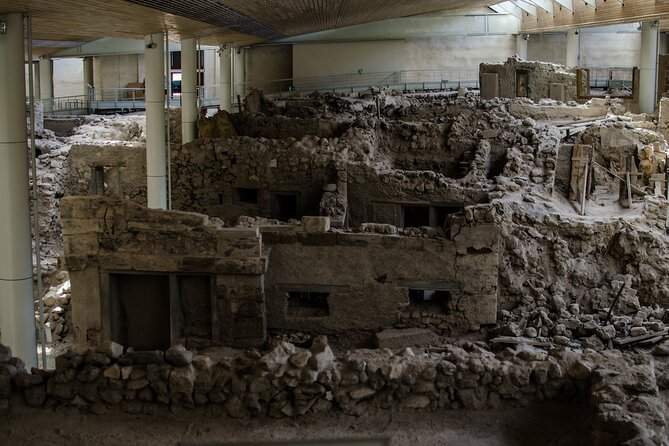
I love that the excavations sit inside an impressive, covered setting, so your visit isn’t a sun marathon. I also love the way the site supports easy exploration with clear information cards and plenty to read at your own pace.
One thing to consider: if you plan to rely on an audio option, it may not line up perfectly with the routes you walk, so be ready to use the signage and stop to read along the way. Value can also be a question if you’re comparing online vs. on-site pricing.
In This Review
- Quick highlights before you go
- Akrotiri’s Archaeology: What makes the site so memorable
- Entering without the ticket-office shuffle
- The walk through an ancient town (and how long it really takes)
- Covered excavations: why shade is part of the experience
- Self-guided learning vs. getting more from your visit
- Akrotiri’s big picture: why it’s compared to Pompeii
- Pair it with the Prehistoric Museum in Fira
- Getting there from Fira: keep it simple
- What to look for once you’re inside
- Price and value: what you’re paying for
- Who should book this Akrotiri ticket?
- Should you book this ticket?
- FAQ
- How long does the Akrotiri archaeological site visit last with this ticket?
- What is included with the ticket price?
- Do I need to arrange hotel pickup or drop-off?
- Is confirmation provided when I book?
- Are tickets available for younger travelers or reduced-price options online?
- Is the audio guide part of the experience?
- Can I cancel or change my booking?
- Is it suitable for most people?
Quick highlights before you go
- Skip-the-line entry saves you waiting at the ticket point
- Covered excavations keep things comfortable in the heat
- Lots of English and Greek signage helps you make sense of what you’re seeing
- It feels like walking through a whole town, not a few rooms
- Easy timing: plan roughly 1 to 3 hours and you’ll still have energy for Santorini
Akrotiri’s Archaeology: What makes the site so memorable
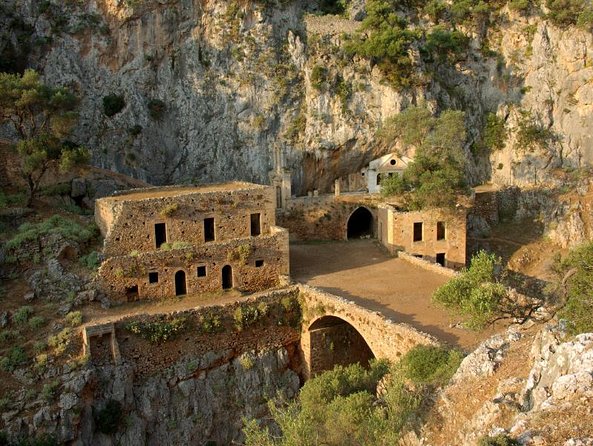
Akrotiri is one of those places that makes you slow down without trying. You’re looking at an entire ancient settlement, not just isolated artifacts. The big story is the disaster: an earthquake buried the city, preserving buildings and street layouts in a way that’s almost cinematic.
What I find so compelling is how visible daily life can be when the excavation is done well. You don’t just see walls; you see the logic of how people moved through a town. And because the site is covered, you can actually spend time reading and walking without feeling like you’re being roasted on a sidewalk.
A lot of the appeal comes from the setting, too. The excavated area is inside a large protective structure, and that matters. Shade changes everything on Santorini, where strong sun can turn a great morning into a quick exit.
You can also read our reviews of more tours and experiences in Santorini


Entering without the ticket-office shuffle
The main practical perk here is skip-the-line admission. You’re not just buying entry—you’re buying time and reducing uncertainty about when you’ll get in. If you’re visiting during a busy season or you’re working around other plans on the island, that matters more than you’d think.
In practice, I’d treat your visit like a timed slot you can build your day around. Many visitors prefer arriving once they know they can enter, then using that window to explore at a comfortable pace rather than waiting in a line and losing momentum.
One note on value: while you’re paying for convenience, some people report that buying at the entrance can be cheaper than reserving online. If you’re the type who enjoys spontaneous plans and you’re not pressed for time, it’s worth keeping that in mind when deciding whether the skip-the-line benefit is worth the markup.
The walk through an ancient town (and how long it really takes)
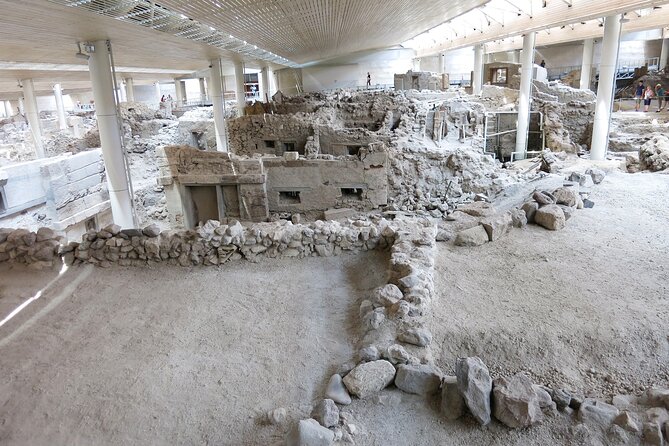
This experience is listed at about 1 to 3 hours, and that range feels right once you’re actually inside. If you move fast and mostly scan, you can do it on the shorter end. If you stop, read, and take in the layout, you’ll likely stretch it toward 2 or 3 hours.
The site is larger than many first-time visitors expect. You’re not hovering around a single exhibit. You’re walking through sections that can feel like neighborhoods—streets, building spaces, and interpretive stops that help you picture what life might have been like.
Also, it’s not a punishing route. There’s seating and information laid out in a way that makes pauses easy. That’s a big deal at Akrotiri, because understanding the site takes a little effort, and you’ll want breaks.
Covered excavations: why shade is part of the experience
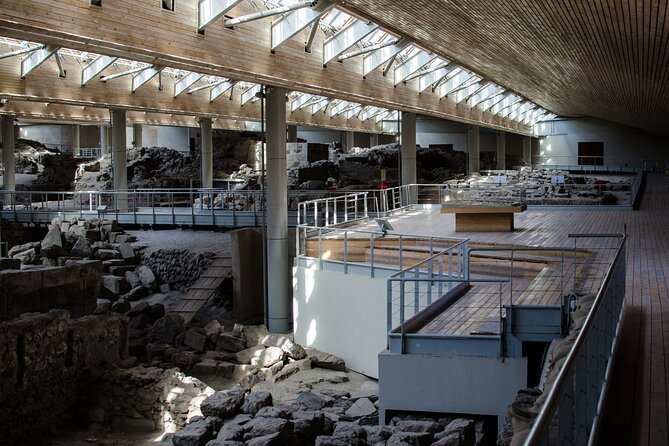
Akrotiri’s protective roof isn’t a minor detail. It changes your visit from a frantic outdoor hunt into a proper archaeological stroll.
Here’s what that means for you:
- You can spend longer reading interpretive signs without overheating.
- You can slow down and look for patterns in the town layout.
- You’re less likely to feel rushed if the day is bright and hot.
Several visitors specifically mention how nice it is to be under cover, and that the atmosphere can even feel like stepping into a thoughtfully arranged exhibit space rather than just an open excavation.
Self-guided learning vs. getting more from your visit
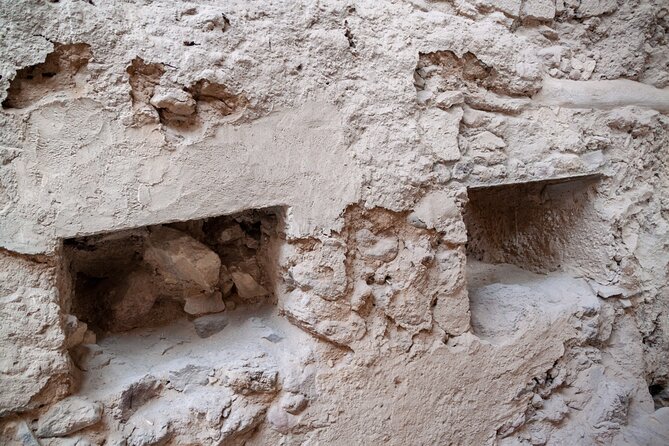
This ticket gives you admission, and then you’re on your own inside. That’s a good thing if you like to set your own pace. It’s also a good idea because the site provides plenty of reading material.
That said, don’t underestimate how much more you’ll get if you add interpretation. Some visitors recommend choosing a guide at the site if you want help connecting details—like what certain rooms or features were likely used for—to the broader story of the settlement.
If you’re considering an audio option, keep your expectations practical. One report highlights a mismatch between an audio track and the pathways you actually follow inside, which made the audio less useful. In that case, signage alone worked better. My advice: treat audio as optional. Let the on-site information cards and your own walking route do the heavy lifting.






Akrotiri’s big picture: why it’s compared to Pompeii
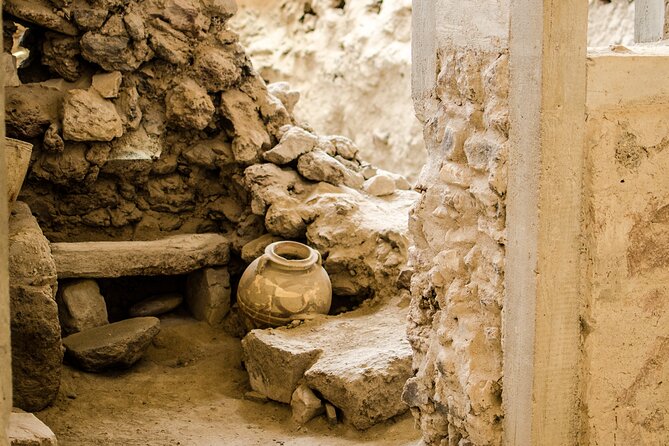
The Pompeii comparison isn’t just marketing. The connection is the preservation effect of a sudden disaster. In Akrotiri’s case, the city was buried after an earthquake, and the excavation shows a settlement that survived long enough to be discovered with structure still visible.
Once you get that mental frame, the details start to click. You’re essentially reconstructing a town from what’s left—how it was built, how it functioned, and what kind of life people were living right before the burial.
One more thing: Akrotiri helps you see Santorini as more than beaches and cliffside villages. It’s proof that the island’s story runs deep into the ancient Aegean, and it gives you a reason to care about the ruins beyond just taking photos.
Pair it with the Prehistoric Museum in Fira

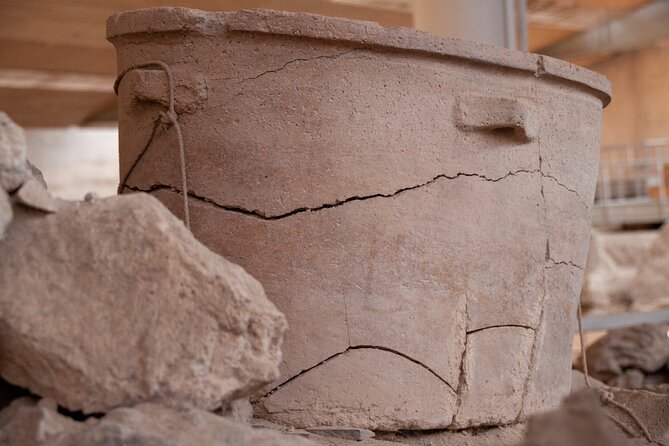
If you want your day to feel richer, plan to add time for museum viewing back in Fira. Many visitors find that the Prehistoric Museum in Fira complements Akrotiri well because it displays key finds connected to the town.
Even if you don’t want a full museum day, this pairing works because Akrotiri gives you context in place—what the town looked like—while the museum tends to show objects and interpretations that are harder to understand on-site.
Think of it as two halves of the same lesson. One is the built environment; the other is what people left behind.
Getting there from Fira: keep it simple
You don’t have to overcomplicate logistics. Akrotiri is reachable by public bus from Fira, which is handy if you’re staying in the main hub.
If you’re relying on buses, the practical strategy is to give yourself breathing room. Santorini days can be tightly scheduled, and travel time adds up fast once you’re hopping between views, meals, and viewpoints.
If you prefer taxis or rental cars, you can still do that, but buses are often enough for this one-stop visit.
What to look for once you’re inside
Akrotiri rewards attention to layout and details more than it rewards rushing for the biggest photo. Here are a few ways to get more out of your walking time without needing special knowledge:
- Read the information cards as you move from one section to the next. They help you connect what you’re seeing to the wider story.
- Use the seating breaks to reset. When you’re inside a large site, the temptation is to keep walking nonstop. Sitting for a minute helps the meaning stick.
- Notice how the excavation is presented. The covered structure and organized pathways are designed to make a complex site understandable.
If you’re the kind of traveler who likes to feel oriented, you’ll probably appreciate that the site includes lots of signage in both English and Greek.
Price and value: what you’re paying for
At $33.72 per person, you’re paying for admission plus convenience. The big question is whether the skip-the-line benefit and the reduced uncertainty are worth it for you.
Here’s how I’d judge the value:
- If you’re visiting during busy times and want a smoother start, the reservation can be worth it.
- If you’re happy to arrive without pressure and compare options on the spot, you might find better pricing directly at the entrance.
Either way, I’d still consider this a solid use of time. Akrotiri isn’t just a stop—it’s one of those experiences that makes Santorini feel like a real place in history, not just a pretty postcard.
Who should book this Akrotiri ticket?
This is a great choice if:
- You want a single focused stop rather than a packed tour day
- You like archaeological sites where the layout helps you understand daily life
- You prefer self-guided exploration with lots of signage
- You want to spend about 1 to 3 hours learning without exhausting yourself
It might be less ideal if:
- You’re only interested in an experience that relies heavily on audio guidance (since audio may not match pathways perfectly)
- You’re very price-sensitive and are willing to handle admission on your own at the entrance
Also note the ticket age rule: this one is for travelers over 25. Reduced-price tickets are not available online.
Should you book this ticket?
If you’re going to Akrotiri anyway—and you probably should—this ticket is worth considering because skip-the-line entry helps you manage a tight Santorini schedule. The covered site makes it comfortable, and the information signage makes it genuinely usable even without a guide.
My call: book it if you value a predictable entry time and you like exploring at your own pace under shelter. If you’re going off-season, traveling slowly, and don’t mind lines, you may want to compare on-site pricing first.
FAQ
How long does the Akrotiri archaeological site visit last with this ticket?
The visit is approximately 1 to 3 hours.
What is included with the ticket price?
Your ticket includes entrance to the Akrotiri Archaeological Site.
Do I need to arrange hotel pickup or drop-off?
No. Hotel pickup and drop-off are not included.
Is confirmation provided when I book?
Yes. You’ll receive confirmation at the time of booking.
Are tickets available for younger travelers or reduced-price options online?
This ticket is for travelers over 25 years. Reduced-price tickets are not available online.
Is the audio guide part of the experience?
An audio option is discussed by some visitors, but one report says the audio did not match the pathways inside the site. If you use audio, plan on relying on the on-site signage as well.
Can I cancel or change my booking?
No. The experience is non-refundable and cannot be changed for any reason.
Is it suitable for most people?
It’s stated that most travelers can participate.